A brand of the Aebi Schmidt Group

How Does a Turbocharger Work?

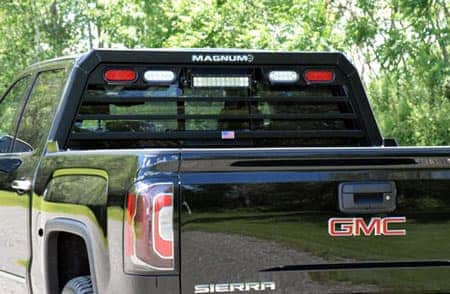
Chances are, if you’re reading this blog you’re well aware of how to make your truck look badass with one of our headache racks and LED lights. Now that you’ve got the outside of your ride taken care of, it’s time to explore how to achieve some serious power under the hood.

Today, we’re exploring how a turbocharger works, along with some of the benefits.

How a turbocharger works

The basic idea is that the exhaust drives the turbine (the red fan), which is directly connected to (and powers) the compressor (the blue fan), which rams air into the engine. For simplicity, we’re showing only one cylinder. Here then, in summary, is how the whole thing works:

  1. how-turbocharger-worksCool air enters the engine’s air intake and heads toward the compressor.
  2. The compressor fan helps to suck air in.
  3. The compressor squeezes and heats up the incoming air and blows it out again.
  4. Hot, compressed air from the compressor passes through the heat exchanger, which cools it down.
  5. Cooled, compressed air enters the cylinder’s air intake. The extra oxygen helps to burn fuel in the cylinder at a faster rate.
  6. Since the cylinder burns more fuel, it produces energy more quickly and can send more power to the wheels via the piston, shafts, and gears.
  7. Waste gas from the cylinder exits through the exhaust outlet.
  8. The hot exhaust gases blowing past the turbine fan make it rotate at high speed.
  9. The spinning turbine is mounted on the same shaft as the compressor (shown here as a pale orange line). So, as the turbine spins, the compressor spins too.
  10. The exhaust gas leaves the car, wasting less energy than it would otherwise.

(Source: explainthatstuff.com)

According to How Stuff Works,

“… a turbo can significantly boost an engine’s horsepower without significantly increasing its weight, which is the huge benefit that makes turbos so popular!

One of the surest ways to get more power out of an engine is to increase the amount of air and fuel that it can burn. One way to do this is to add cylinders or make the current cylinders bigger. Sometimes these changes may not be feasible — a turbo can be a simpler, more compact way to add power, especially for an aftermarket accessory.

Turbochargers allow an engine to burn more fuel and air by packing more into the existing cylinders. The typical boost provided by a turbocharger is 6 to 8 pounds per square inch (psi). Since normal atmospheric pressure is 14.7 psi at sea level, you can see that you are getting about 50 percent more air into the engine. Therefore, you would expect to get 50 percent more power. It’s not perfectly efficient, so you might get a 30- to 40-percent improvement instead.”

As kadekticaret.com simply puts it, “a turbocharger is basically an air pump… that gives your vehicle more ‘oomph.’

Still craving more information on turbos? Check out the video below for additional info:

Not totally convinced you’re ready for a turbo? No sweat! Keep exploring our headache racks, accessories and more and ensure your ride is totally up to par on the exterior.
Bed Rails

5 Things to Know About EFILive

EFILive At Magnum, we know how important it is for your pickup truck to depict your personality. Our customers want to drive the coolest trucks around, and sometimes that means after they’ve gotten one of our headache racks, the next step is putting in a lift kit and tuning it.

That brings us to EFILive. EFILive is a scan and tune tool that allows you to custom-tune your diesel truck. Benefits to tuning your truck include increased horsepower, MPGs, additional torque and much more. Tuning should only be attempted by experienced users or professionals.

1. EFILive provides users with real-time feedback via the data-logging function. “The type of information you now have the ability to gather is virtually limitless—from boost to EGT to transmission shifting strategies” (via TruckTrend.com).

2. It’s super easy to figure out whether EFILive supports your diesel truck or not. Simply head to the EFILive website and browse the make and model to get started. Looking for beneficial tech tips, customer support or general FAQs? EFILive has you covered.

3. EFILive’s tuning tool offers some serious options, including a valet mode, staging mode, real time variable pulse width control, manually control gear selection and much more (via rollinsmokediesel.com).

4. There is zero wait time when switching your custom tunes. “Want a half-fuel tune for city driving or emissions? A tow tune? A race tune? Well, you can have all those at the simple flick of a switch—in seconds. With traditional programmers, you might have to wait several minutes for a new tune to load” (via TruckTrend.com).

5. Software updates are freely available at the EFILive website. Click on this link to go directly to the Download Software page. According to the site, “there are 3 types of software releases that customers can choose from, depending on the current development cycle. Customers’ individual circumstances and tolerances will determine which software is most suited to their application; Public Release Software, Public Pre-Release Software/Release Candidate Software, and Beta Software.

Looking for the ultimate truck tune? Check out some of the best in the business, with libraries to fit any given application:

Adrenaline Truck Performance: specializing in diesel truck performance tuning, parts, and accessories. A brick and mortar shop providing top-notch customer service for our walk-in and online customers.

SoCal Diesel: 26 years of high-performance automotive cylinder head and related parts engineering, design and manufacturing can be found here at Advanced Motorsports Technology and its subsidiary SoCal Diesel.

RidgeRunner Diesel: Entering their 10th year in business with a proven record of top running street trucks, daily drivers, weekend racers and pullers and top performing/all out dedicated race trucks and sled pullers.

Fleece Performance: The FPE’s engineering team is equipped with all the tools required to develop and test new products from turbochargers to injection pumps to electronic controllers. From the first brainstorm to the finished product, quality, innovation, and customer satisfaction are the focus.

Duramaxtuner.com: Balancing power, heat, drivability and efficiency is something that takes time and a solid understanding of engine dynamics. Those who plan on running their trucks loaded for an extended period of time should take care to match their tuning and parts closely to the application; Duramaxtuner.com understands your need for reliable, powerful, and consistent power delivery.

PPEI: Power Performance Enterprises, Inc (PPEI) by Kory Willis strives to bring your diesel truck to its full potential. Motivated to better your truck and ourselves for 5 years, they will continue to offer their highest quality tuning, support, and service to our customers.

Bed Rails

10 Lesser Known Facts about Magnum and Our Headache Racks

headache-rack-10-reasons At Magnum, we are truck enthusiasts first and foremost, and manufacturers second. We understand the importance of tricking out your truck because we love our trucks as much as you do. By now, you probably know that we created Magnum to fill a void in the aluminum headache rack industry – where extreme function meets ultimate style. We knew a pickup truck could protect your window while also giving your truck a badass look.

So while that part of our story may be obvious, here are 10 lesser-known facts about our headache racks and our company:

1. Magnum has been operating for about 10 years in central Maine.

Starting in a small garage, Magnum eventually grew into the 50,000 square-foot space that we’re now in, located in Waterville, Maine. Being Made in the USA is extremely important to us, and we’re proud to be bringing jobs and commerce to the central Maine community we were founded in.

2. Magnum’s original founder is still with the company.

Bill Cleaves continues as one of the owners of Magnum, responsible for product design and new product development. Staying ahead of the curve is something Bill and the Magnum team have built their reputation on. New products and innovation are the hallmarks of Magnum. Bill and the rest of the team are no strangers to manufacturing. In fact, the leadership team at Magnum has a collective 85 years of founding, developing and working in their manufacturing companies.

We understand that when you buy a Magnum headache rack with bar & rails, it’s an investment that you’re excited to receive as soon as possible. After one of our customers purchases a headache rack, we aim to have it shipped within 1-3 days.

4. We work with dealers across the USA.

Just because we manufacture our products in central Maine doesn’t mean our customers are limited to where they can find our products. We work with dealers all across the United States to ensure our products are in the same areas as our customers. Our list of Magnum dealers is constantly expanding.

If you’re looking for a dealer, head to our Find A Dealer page »
Interested in becoming a dealer? Let’s chat »

5. Our product line is expanding in a big way.

For Magnum, 2016 is the kickoff of product expansion. As we continue to research the latest trends in truck accessories and cater to the needs of our clients, we’ve recently launched several new products including the Front Rack Extension Tube. We recently completed our redesigned rail kit to compliment the Magnum Racks. This will be introduced on the website in the near future. Our team will continue to look at what our customers are asking for, and where the industry is heading.

6. Our Warranty is unbeatable.

We’re proud to offer the best warranty for our products in the industry. We warrant to the original owner “… that his aluminum Truck Rack will be free from defects in craftsmanship and material for a period of his lifetime. The warranty period begins the day of purchase by the original end-user.” See the full warranty »

7. Our parent company, The Shyft Group, is more than just headache racks.

Magnum Manufacturing is in good company with The Shyft Group’s other brands, which include DuraMag Truck Bodies and Royal Truck Bodies, among others. The Shyft Group is passionate about providing truck enthusiasts with whatever equipment they need to get the job done, or to simply make their truck as cool as possible.

8. Magnum’s employees are invested in our industry and community.

instagram-feed Our team takes our love for the industry seriously. For example, our Purchasing Manager, Julian Margitza is a part of a professional Welding Committee at KVCC, a local Maine community college.

9. We support the do-it-yourselfers.

We understand that some of our customers enjoy figuring things out themselves, especially when it comes to modifying their trucks. That’s why we’ve worked to come up with fresh video content, step-by-step instructions and other ways to help inform you on the best way to install your Magnum products.

Explore our Installation instructions »
Visit our Video Tutorial page »

10. We love it when you show off your trucks.

There’s nothing we enjoy more than when our customers take pride in their trucks, especially when they’re sporting Magnum gear. Whether it’s on Instagram, the Magnum Facebook page, or our website, we look forward to seeing your photos.

Bed Rails

Everything You Need To Know About Mud Tires

mud-tires Vehicle owners typically buy mud tires as an aftermarket option, especially for four-wheel-drive (FWD) trucks. These tires have larger tread elements that provide greater traction on soft, wet surfaces. They also have more space between the tread elements, which allows mud to clear the treads more quickly. Mud tires may not provide good traction on hard surfaces, depending on their specific composition and tread pattern. Furthermore, mud tires are noisier at highway speeds due to their open treads.

Types

Basic mud tires are designed for trucks that are typically driven on roads with occasional use in mud. Their tread patterns generally resemble those of standard tires although the treads may be up to one inch deep. These tires provide a comfortable ride on hard surfaces, while still being able to dig into mud.

The characteristics of a medium mud tire lie between a basic and extreme mud tire. The most popular type of mud tire and are primarily designed for drivers who spend most of their time in mud. The tread depth on these tires is typically between one and 1.5 inches, allowing them to quickly sling mud out of the tread. They also provide good traction in other soft terrain such as sand and snow.

Extreme mud tires are designed exclusively for driving in mud, commonly known as mud bogging. They have very large, treads with a minimum depth of 1.5 inches, allowing the tires to push a vehicle through deep mud. Extreme mud tires are typically used on large-bore ATVs that often must be modified to accommodate these large tires.

Tire Width

The ideal width of a mud tire primarily depends on the specific type of mud you’ll be driving through. For example, narrow tires are best for a soft layer of mud on top of a hard bottom layer. These tires can cut through the top layer to gain traction in the hard layer below. In comparison, a wide tire will have a tendency to float on the top layer without ever reaching hard mud, a phenomenon commonly known as hydroplaning.

A wide mud tire is best for mud with a thick cement-like consistency, especially when the terrain below is variable. This tire’s tendency to hydroplane is also useful for driving on sand. Wide tires are also better suited to under inflation, commonly known as “airing down.” This technique increases the contact area between the tire and the terrain, thus improving traction. Mud boggers with wide tires often air down by 15 to 20 pounds per square inch (psi), although the exact amount depends
on factors such as the tire’s size and stiffness.

Tread Pattern

A tire’s tread pattern is generally composed of lugs and voids. Lugs are the portion of the tread that protrude above the tire’s surface, while the voids are the grooves in the tire that separate the lugs. Mud tires generally have larger lugs and wider, deeper voids than standard tires. This design causes mud to be channeled out of the tread when the tires spin through mud, effectively self-cleaning the tire.

The manufacturer’s tread pattern typically determines a mud tire’s success, which vary greatly between manufacturers. The lugs on a mud tire can be highly effective at hooking themselves around solid terrain under the right conditions. This benefit generally requires the tires to be properly aired down so the voids can effectively channel mud away from the center of the tire. Otherwise, the voids can become tightly packed with mud, giving the tire a completely smooth surface. Once this happens, the voids often must be cleared manually before the tire can obtain any significant traction.

Narrow voids are more useful for dry, soft surfaces, especially with wide tires. This type of tire is especially useful for sand dunes, which effectively have no bottom. Tires with narrow voids tend to stay on top of the surface instead of digging down, as is the case with wider voids.

http://www.pureoffroad.com/mud_atv_tires.htm
http://www.offroaders.com/info/tech-corner/reading/mud.htm

What Happened to the Nissan Frontier Diesel Runner?

2011_nissan_frontier_d22 The Nissan Frontier is the brand name for the D22 and D40 generations of Nissan utility vehicles in American markets. It’s also sold as the Nissan Navara in many other markets, including Asia, Europe and Australia. The Nissan Frontier Diesel Runner was a concept version of the Frontier that was exhibited in 2014. It hasn’t been put into production as of 2016, although Nissan has implemented some of its primary features in other models.

Overview

The D22 Nissan Frontier was a compact pickup introduced in 1997 as a replacement for the aging D21 Nissan Hardbody. D22 sales were discontinued in the United States in 2004, although it continues to be sold as the Nissan Navara in other countries. The D40 Frontier is a mid-size pickup that replaced the D22 in the United States for the 2004 model year. This version of the Frontier is still in production as of 2016.

Performance

The Frontier Diesel Runner was introduced at the 2014 Chicago Auto Show. It was based on the 2015 Nissan Frontier Desert Runner, which is a trim level of the Frontier that adds a color display, smartphone integration and a navigation system among other technological innovations.

The Diesel Runner had a 2.5-liter l-4 Cummins turbo diesel instead of Nissan’s standard 4.0-liter V6 gas engine. It also had an 8-speed ZF automatic transmission instead of the 5-speed automatic transmission that’s standard for the Frontier. The Diesel Runner’s engine produced 200 horsepower (hp) and more than 350 pound-feet (lb-ft) of torque. This performance level was probably chosen because it matches that of the 2015 Chevrolet Colorado mid-size pickup.

The standard 2015 Frontier receives about 24 miles per gallon (mpg) on the highway. The new transmission and engine increased the fuel economy by about 25 percent, giving the Diesel Runner an estimated highway mileage of about 30 mpg. Nissan claimed that the production version might get as much as 35 mpg on the highway.

Exterior

The primary change to the exterior of the Diesel Runner was a hood insert made of clear plastic, allowing the engine to be viewed without raising the hood. The exterior was painted matte silver and high-gloss red with carbon fiber trim. The hood also had a large Cummins logo in red.

Interior

The interior of the Diesel Runner had the same color scheme as its exterior, instead of the solid black interior that was standard for the Frontier. It also had three auxiliary gauges on top of the center console, which measured transmission temperature, exhaust temperature and turbocharger boost. These gauges would have almost certainly been absent in the production version of the Diesel Runner.

Analysis

The Diesel Runner has not gone into production as of 2016, and is unlikely to be produced in its current form. Even Nissan admits that its drive train won’t fit into the current D40 body without significant alterations. Furthermore, the D40 platform is already 12 years old and will almost certainly be replaced by the time Nissan is ready to put a turbo diesel in a Frontier. However, Nissan did implement this concept in the 2015 Titan.

Titan

The Nissan Titan is a full-size pick that was introduced in the 2004 model year, along with the D40 Frontier. The second generation of the Titan debuted in the 2016 model year, with an engine replacement being the most significant change. The new engine is a 5.0-liter V8 turbo diesel made by Cummins that produces 310 hp and almost 555 lb-ft of torque. Commercial and passenger versions of the Titan will use slightly different versions of this engine.

Conclusion

The purpose of the Nissan Frontier Diesel Runner was to explore the marketability of a mid-size pickup with a turbo diesel engine in the United States. It has already done so with the full-size Titan and will probably return to developing the Frontier as soon as it finishes with the second-generation Titan. Assuming Nissan chooses to include a turbo diesel engine as a power train option for the Frontier at all, it won’t happen before the 2017 model year.

For more information, visit http://www.topspeed.com/cars/nissan/2015-nissan-frontier-diesel-runner-powered-by-cummins-ar162301.html

Which Magnum Truck Rack Is Best for You?

A truck rack is basically a metal frame that attaches to a pickup truck behind the rear of the cab. Its primary purpose is to prevent items in the bed of the truck from going through the rear window during a sudden stop. Truck racks are most often used on working trucks that regularly carry cargo, although they frequently appear on passenger trucks for cosmetic purposes. They also serve as a platform upon which to hang equipment such as ladders. Accessories for truck racks include emergency lights and louvers.

Overview

Magnum truck racks are available in four profiles, including standard profile, low profile, high profile and service profiles. Most models are customized for a particular truck to ensure the best fit without overlapping the truck’s body lines. However, service-profile racks are sold in generic sizes.

Our truck racks are made from aluminum due to its light weight and durability and are constructed with MIG and TIG welds. Each truck rack is equipped with a glide track for maximum versatility and ease of installation. They’re also compatible with our full line of truck rack accessories.

Standard Profile

Chevy Colorado - Truck Rack – Standard Truck racks with a standard profile have a medium height between the low-profile and high-profile racks. They’re compatible with most between-the-rail tonneau covers and are available with a black matte finish. The base model has bars that extend all the way across the frame, while the window-cut-out version has an empty square inside the frame that allows passengers to look out of the rear cab window. The high-visibility rack has no bars at all inside the frame for maximum visibility. The base model and hallow-point model costs $469, and the window-cut-out model costs $519.

The weight of the standard-profile racks is between 27 and 31 pounds, depending on the truck. The width varies from 70 to 74.5 inches, and the height ranges from 24 to 27.25 inches. The depth of all versions of the standard-profile rack is 10 inches.

Low Profile

2018 Ford F250 SuperDuty with a Magnum Low Pro rack with window cutout and lights The height of low-profile racks slightly less than that of the standard racks. Low-profile racks have greater cosmetic appeal and are most likely to be used on passenger trucks. These racks have custom jigs to provide the best possible fit, and will fit most trucks with tonneau covers. Low-profile racks come equipped with fully functional lights, including brakes, reverse and signal lights. The wiring harness on these racks allows the lights to be easily connected to the truck’s organs.

The base model and high-visibility versions of the low-profile racks cost $599, and the window-cut-out version costs $649. The height varies from 20 to 24.25 inches, and the width ranges from 70 to 74.5 inches depending on the truck. The weight is between 30 and 34 pounds, and the depth is 10 inches.

High Profile

2018 Ford F350 High Pro Rack with Lights The high-profile racks are the tallest models and provide the greatest functionality. They provide more coverage of the rear window and offer a larger number of places from which to hang equipment. High-profile racks also have a more rugged design than the standard or low-profile racks, but are otherwise similar to the low-profile racks.

The base model with lights and high-visibility versions of the high-profile racks cost $599, and the window-cut-out version costs $649. The height varies from 24 to 27.25 inches, and the width ranges from 70 to 74.5 inches depending on the truck. The weight is between 27 and 31 pounds, and the depth is 10 inches.

Service Profile

2015 Ford F250 Service Body Truck Rack Service profile racks have the lowest profile of all our racks and are significantly lower than even the low-profile racks. The primary purpose of these racks is to serve as an attachment platform for equipment.

They’re available in heights of 16, 20 and 24 inches. The available finishes are a black matte finish or a black mill finish. These racks are available with and without lights. The base models cost $429 for the mill finish and $479 for the matte finish. Service-profile racks with lights cost $529 for the mill finish and $579 for the matte finish.

Whichever headache rack is best for you and your truck, Magnum Truck Racks has a compatible rack for you. Check out our various racks and pick your favorite accessories, whether that be lights, window cut outs, or even our American flag style racks! American flag truck rack by Magnum Truck Racks

GMC Trucks Get 8-speed Transmissions in 2015

General Motors Corporation (GMC) introduced an 8-speed transmission on some of its cars and trucks in 2015 and increased the number of vehicles available with this option in 2016. This transmission is especially beneficial for large engines that deliver power over a wide RPM range. The vehicles available with the new transmission include those made under both the GMC name and the Chevrolet brand.

Overview

The 8L90 transmission is an 8-speed automatic manufactured by GMC. It has a hydraulic, or hydramatic design that GMC first introduced for the 1940 model year. Hydraulic transmissions provide automatic shifting by combining the hydraulic function of a planetary gearbox with fluid coupling.

The 8L90 is designed for longitudinal engines in which the engine’s crankshaft is parallel with the vehicle’s long axis. This transmission may be used with engines that are located in the front or rear of the vehicle. A bell housing contains the 8L90 when it’s attached to a front engine, although it’s located next to the differential on rear engines.

Engines

The 8L90 is available for GMC’s family of 6.2-liter engines with a 4.06-inch bore, which include the LT1, LT4 and L86. These engines have a range of applications from sports cars to heavy-duty trucks.

The LT1 has been the standard engine for the Chevrolet Corvette Stingray since 2014 and was also introduced in the Chevrolet Camaro for 2016. This engine produces at least 455 horsepower (hp) and 460 pound-feet (lb-ft) of torque, depending on configuration. The LT4 is a supercharged version of the LT1 that’s available for the Corvette Z06 since 2015 and the Cadillac CTS-V since 2016. It produces at least 640 hp and 630 lb-ft of torque, depending on configuration.

The L86, commonly known as the EcoTec3 6.2L is a small-block engine used in trucks. It’s a modified LT1 engine with a reduced compression ratio of 11.5 to 1. It produces 420 hp and 460 lb-ft of torque. This engine has been available since 2014 for the GMC Sierra and Chevrolet Silverado, which are essentially identical except for the front grille and name badge. The L86 has also been available for the GMC Yukon Denali and Cadillac Escalade since 2014.

Gear Ratios

The gear ratios for the 8L90 transmission are as follows:

• 1 4.56:1
• 2 2.97:1
• 3 2.08:1
• 4 1.69:1
• 5 1.27:1
• 6 1.00:1
• 7 0.85:1
• 8 0.65:1
• Reverse 3.82:1

The final drive ratio of vehicles with the 8L90 varies by model. For example, it’s 3.23:1 for the standard Corvette Stingray and Z06, and 2.73:1 for the Stingray Z51. The final drive ratio for the Cadillac ATS-V and Cadillac CTS-V is 2.85:1. The final drive ratio is 3.42:1 for Chevrolet Silverado/GMC Sierra models with the Max Trailering Package and 3.23:1 for all other GMC trucks and SUVs.

Benefits

The larger number of gears in the 8L90 means that their gear ratios are more closely spaced. This characteristic provides a number of benefits, including faster shifting, greater acceleration and improved fuel economy. The increased flexibility in power delivery is particularly helpful for trucks carrying heavy cargo or trailers.

The higher gears allow the engine to run at a lower speed, which improves fuel economy. This improvement is especially noticeable for heavy vehicles with two-wheel drive (2WD) traveling at highway speeds. The two additional gears of the 8L90 also allowed GMC to reduce the rear axle ratio, resulting in a more relaxed driving experience at highway speeds.

For example, the fuel economy of a 2014 GMC Yukon with 2WD is 18 miles per gallon (mpg). The combination of the 8L90 transmission and rear axle ratio of 3.23:1 increased this vehicle’s fuel economy to 22 MPG. This figure is one mpg more than the Yukon’s fuel economy with the base 5.3-l V8 engine.

Conclusion

The only other truck that’s currently available with an 8-speed transmission is the Dodge Ram 1500. GMC’s decision to offer this transmission on many of its vehicles therefore has the potential to increase its sales. However, this feature will need to compete against brand loyalty, which is especially high among truck owners.

Snow Plow Buying Guide – Adding a Plow to Your Truck This Winter

Are you considering adding a snowplow to your truck? If you live in an area that receives heavy snowfall, a snowplow can be a great asset to your truck. Yet purchasing a snowplow is not something to do without the proper research. If you are responsible for plowing a large area, here’s what you should know about snowplows.

Continue reading “Snow Plow Buying Guide – Adding a Plow to Your Truck This Winter”

5 Reasons Your Truck Needs a Truck Rack

If your truck does not currently have a truck rack, you are missing out! Truck racks, the metal attachments that are fitted to the back of a pickup truck behind the back window, provide invaluable protection and support for working trucks. If you are regularly carrying loads in your truck, or are hauling large items, without a truck rack, your truck and your safety as a driver are at risk. Here are five benefits of truck racks that you need to consider.

Continue reading “5 Reasons Your Truck Needs a Truck Rack”

Magnum Backracks for Trucks

A truck headache rack is a baffle, or wall-like structure, that protects the driver during a sudden stop. The specific placement of headache rack depends on the type of truck. For example, the back rack on a pickup truck is typically installed directly behind the cab. A flatbed trailer usually has the headache rack at the front of the trailer or the rear of the tractor.

Continue reading “Magnum Backracks for Trucks”