A brand of the Aebi Schmidt Group

Types of Truck Bedliners – Which Is Best?

Introduction

For working trucks, truck bedliners are a vital piece of equipment. Bedliners are products that “shield the inner-side of a truck bed from damage and also can create a skid-resistant surface allowing cargo to stay in place, depending on circumstances,” according to Wikipedia. Bed liners protect the truck’s bed, so you can use it without fear of damage to your truck’s paint. For most truck owners, a bed liner is simply part of the package. In fact, some have said that a truck without a bed liner “feels like a foot without a sock.” If your truck does not yet have a bed liner, here are some considerations to make.

Bed liner
Photo Credit: https://www.pickupspecialties.com

Know the Options

Bed liners can be as simple as a couple of two-by-fours you lay down in the truck to protect the bed to a complicated drop-in design. When buying a liner, you must first decide if you are going to buy an aftermarket liner or one directly from the manufacturer.

Aftermarket liners include everything from rubber mats to outdoor carpeting. These can be affordable and effective, but they can also be ineffective. A better option is to choose one from the manufacturer, as this ensures a good fit and great protection.

Manufacturers offer two main options: spray-in liners and drop-in liners. Both provide their own set of benefits and drawbacks that you should consider. In short, drop-in bedliners are a less permanent and more affordable option for your truck bed. They require no preparation and can be easily removed when necessary. In contrast, spray-in bedliners adhere to your truck bed meaning they can’t easily be taken out once installed. They provide more protection for a truck bed but are also more costly.

Pros and Cons of Drop-in Liners

Drop-in Liner
Photo Credit: AutoAnything

Drop-in liners are typically made from a form fitted plastic sheet that is placed (dropped in) the bed and bolted into place. Because they come directly from the manufacturer, they should provide an exact fit for your specific truck.

Drop-in liners come with several options. You can decide, for instance, if you want the liner to cover just the floor of the bed or the sides as well. Liners can be under the rail or over the rail, depending on what other things you will add to the truck. An advantage to a drop-in liner is that they’re much more affordable than spray-in liners. After-market drop-in liners range from $100-$400+.

According to AutoTrader.com, “spray-on liners are extremely tough, but they tend to be thinner than drop-in options. Heavy or sharp objects can cause gouges or scratches in your liner that might be better protected by the thicker drop-in option. Keep in mind, it’s possible to break a drop-in bed liner, but the force required is significant.”

The hard plastic of a drop-in liner makes it easy to load large objects. Also, they are easy to replace if needed, and can hide current damage to the truck bed. Drop-in liners do allow water to get trapped between the plastic and the truck, which can cause rust. Over time, they may also become loose and will need to be replaced.

Pros and Cons of Spray-in Liners

Spray-in liners are permanent liners because they are created by spraying polyurethane elastomer directly onto the bed. “Spray-on bedliners can be applied by roller, low pressure, cartridge driven by an air compressor or high pressure machine” (Wikipedia). This means that these liners do not allow any water, dirt or other damaging items to get trapped between the liner and the bed. They also can’t break or fall out, as can drop-in liners. The durability and overall performance of a spray-in liner is dependent on the truck bed’s initial surface preparation.

Spray-on bedliner
Photo Credit: Mechanical Caveman

Spray-in liners typically have a gritty texture. This means that items in the bed of the truck will not slide around, because the bed itself has traction. A spray-in liner is also more aesthetically appealing, because it does not add bulk to the truck. That said, these are more expensive than drop-in liners. While you can do it yourself, it’s best to have the factory install this liner to ensure it is done right. Loading heavy items can be difficult, because these liners are designed with built-in traction, so the items don’t slide in easily.

Also, it’s important to note that “environmental conditions such as humidity, temperature, wind, and elevation can affect the cure process of a spray-in bedliner. Nozzle aperture, thinners, and spray pressure can be modified to allow proper distribution of the spray lining chemicals” (Wikipedia).

Summary

“At some point, virtually every truck owner stands at a crossroads — whether to drop in or spray on a bed liner. This seemingly small decision will determine how your truck ages, how you are able to use the bed and how the vehicle will look for years to come.” (AutoTrader.com)

So which type of liner is best? The answer depends on what you will do with the truck. If you are looking for longevity and the best overall protection, you want a spray-in liner. If you want ease of loading, are happy to replace the liner sometimes and need the more affordable option, then you want a drop-in liner.

Regardless of the one you choose, a liner is an important protection for your truck. Install one today, and protect the paint while enjoying the full working capabilities of your pickup.

Aluminum or Steel Truck Racks: Which Is Better?

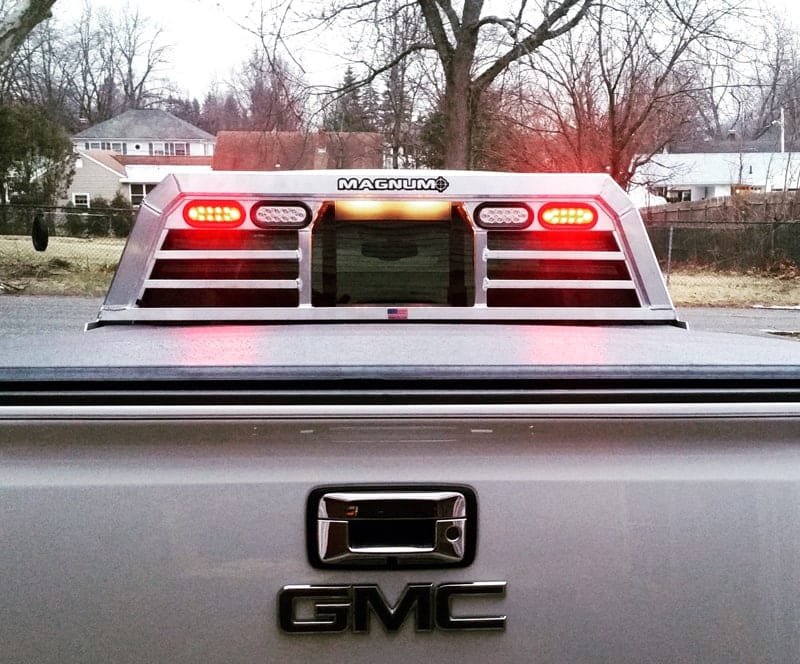
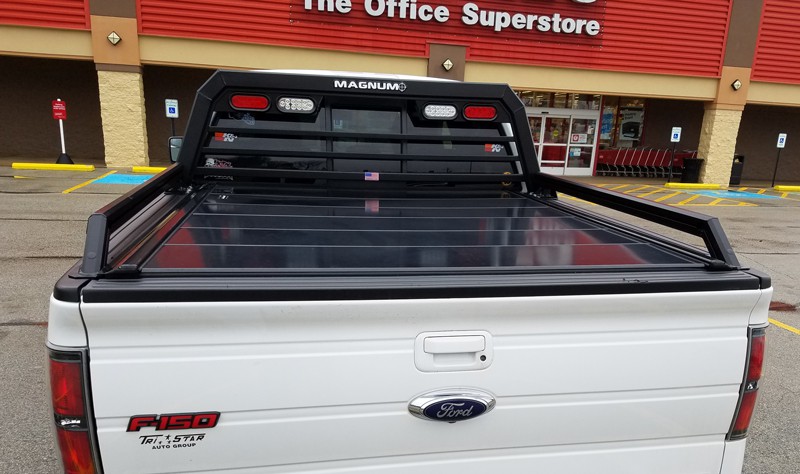
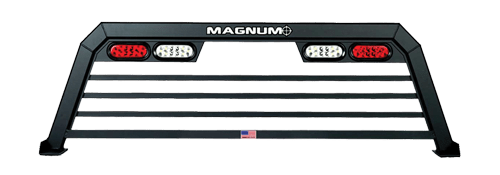
Aluminum or Steel Truck Racks: Which Is Better? A truck rack is a vertical metal frame that’s mounted directly behind the cab of the truck. Traditionally, its primary purpose was to prevent heavy or sharp items in the bed of the truck from going through the cab’s rear window. Truck racks, also referred to as headache racks, have evolved over time to serve a variety of different functions. In addition to being functional, racks are also installed by truck owners to give their vehicle a stand-out, striking look. Many truck racks now include optional eye-catching lights and a sleek design.

Truck racks have traditionally been made from steel, although aluminum racks are now gaining in popularity. Some truck racks also contain both aluminum and steel parts. To determine the best choice of material for a truck rack depends on factors such as the rack’s required strength and the environment. So, which should you choose: an aluminum or steel truck rack?

Overview

When comparing the properties of steel and aluminum racks, it’s important to remember that aluminum racks are made of aluminum alloys rather than pure aluminum. Although steel is sometimes stronger and more durable than pure aluminum, aluminum alloys are actually stronger than some common steel alloys. Aluminum also weighs significantly less than steel does, which allows a manufacturer to make the metal thicker (i.e. “gauge” it) in certain areas of a product, without adding an unnecessary amount of weight.

Aluminum or Steel Truck Racks: Which Is Better? According to Ford Motor Company, “aluminum (is) a third as dense as steel, (so) you can have three times the thickness before you have the same weight as steel. So, in a lot of cases, we tailored it to the strength we needed… (furthermore) aluminum actually has better properties for dent and ding resistance, but we can also just up-gauge it another tenth of a millimeter and still save 40 percent of the weight.” (Forbes.com)

A rack should be able to withstand the sudden impact of items from inside the truck that could strike it during heavy braking such as clamps, hammers and wrenches. A truck rack may also need to protect the cab window from much heavier cargo in the truck bed. Racks may also be used to hang items, requiring the rack to support a constant load. In the case of pickup trucks, these items may be relatively light such as emergency lights or rear-facing cargo lights. The racks for semi-trucks are more likely to be used for heavier items such as tire chains.

Steel Racks

Historically, steel truck racks have been generally less expensive than aluminum racks of the same strength. However, over time aluminum racks have become equally as competitive in price and are no longer sold at a premium in comparison to steel. Generally, steel racks are constructed by welding various pieces together.

One advantage of steel is its magnetism. This property allows you to attached magnetized items by simply placing them against a steel truck rack. In general, however, there simply aren’t as many benefits to manufacturing truck products from steel anymore. Steel is corrosive and will determinate over time, whereas aluminum is a longer-lasting product. Steel also rusts, which gives an unsightly appearance. Before welding can be done on steel, all old paint must be chipped and removed first, which can be very labor intensive.

Aluminum Racks

Aluminum or Steel Truck Racks: Which Is Better? Aluminum’s light weight is one of its primary advantages over steel. Aluminum has about one-third the density of steel, as outlined above in the Forbes.com article. The net result of these differences is that an aluminum rack will typically weigh 10 to 15 percent less than a similar steel rack. This weight difference can be significant for large racks, especially in the case of commercial trucks where cargo capacity is important.

Aluminum racks don’t rust because aluminum alloys do not contain iron, which is the primary component in steel. Truck racks made from steel must use additional methods to protect them from rust. Stainless steel resists rust well, but it’s also more expensive than regular steel and not as strong. Steel truck racks can also be galvanized, which involves coating them with zinc. This process prevents the steel from rusting, but it also adds to the cost of the rack. In addition, galvanized steel requires preventative maintenance to keep the zinc layer from wearing off over time. Overall, an aluminum truck rack will keep a polished, new appearance far longer than a steel rack.

Summary

In 2017, aluminum racks are the clear winner when compared to steel. An aluminum truck rack is comparable in price to a steel rack but it is significantly lighter weight. This allows a manufacturer to manipulate specific areas of the rack to provide more strength through “gauging.” Aluminum racks are also much more polished, due to the fact that they do not rust like steel racks.

LED Light Bars For Truck Racks

A light bar is a series of bar-shaped LED lights held within a strip of plastic or other material. They’re a popular aftermarket accessory for trucks because LED bars provide both practical capabilities as well as cosmetic appeal. LEDs also provide advantages over traditional incandescent lighting, especially for vehicles. LED light bars for trucks are commonly installed in a variety of places on a truck including your truck’s headache rack.

Overview

50" LED double row light bar
13″ LED Double Row Light Bar

The primary disadvantage of incandescent lighting for vehicles is its inefficiency. These lights draw power from the vehicle’s electrical system, which requires the engine to work harder and use more fuel. LED lights typically uses 1/3 the power of the equivalent incandescent bulbs. Magnum offers a 50″ LED Double Row Light Bar that can be added to an existing Magnum Rack Glide Track. This light bar features 100 3-watt high-performance LED lights, which provides 20,000 raw and 13,489 effective lumens. This is done while only using an insufficient 17.6 amps from your truck’s system. Magnum’s light bars offer versatility, ease of use, and serious durability.

LED lights also provide greater visibility than incandescent bulbs since their color temperature is more similar to natural lighting. Magnum’s light bars are created with high-impact polycarbonate lenses which resist yellowing. Our light bars also meet the IP-67 dust and water immersion rating. LEDs have characteristics that make them safer to use than incandescent bulbs.

The efficiency of incandescent bulbs means that much of the electrical energy that the bulb receives is converted into heat rather than light, which is why they get so hot. Furthermore, incandescent bulbs require more time to turn on than LEDs. An incandescent bulb requires about 1/4 seconds to reaches maximum brightness, while LEDs turn on almost instantly. This delay can be critical in emergency situations such as a driver braking without warning.

Tailgate

A light bar for a tailgate is typically installed on the bottom of the tailgate so that it’s just above the bumper. These light bars are used as brake lights to provide additional warning to other drivers during braking. Some owners also use tailgate LEDs as running lights to indicate that the vehicle is in operation.

Tailgate LEDs can increase your truck’s overall visibility by connecting them to other lights such as hazard lights, reverse lights and turn signals. They are normally red when serving as running lights, although they can become brighter when used as brake lights or turn signals Tailgate LEDs can also turn white when you back up.

Rear Bumper

Trucks with a high ground clearance, often times that have a lift kit installed, sometimes have a step on the bumper to help passengers climb into the cab. LED lights on the bumper allow passengers to find the bumper step at night. Like tailgate lights, bumper lights can also mirror the behavior of other lights by becoming brighter or changing color.

Rear bumper lights also help drivers who frequently use their trailer hitch for hauling. Having additional rear-facing lights makes getting hitched to a trailer, or other piece of equipment easier than ever. Rear bumper lights can also help protect your truck’s bumper from hitting another object when backing up.

Spotlights

LED 4.25″ X 2.5″ RECTANGULAR UTILITY FLOOD LIGHT Spotlights make the truck easier to see at night, especially in circumstances of poor visibility such as working off-road or rough weather conditions. Magnum’s LED rectangular utility flood light provides the right amount of light, exactly where you need it. Spotlights are often used when short range light output is required. Spotlights typically have sturdy housings that allow them to be securely mounted to the front of the truck. Some truck spotlights can be grouped together in various ways to further increase their lighting intensity and create an eye-catching look.

Brake Lights

Drivers often fail to notice a truck’s brake lights immediately when it only has one brake light on each side of the truck. A third brake light in the middle of the truck can get the attention of other drivers more quickly since they’re more likely to be looking at this location.

LED lights that are used specifically as a third brake light can also serve as additional hazard, reverse and turn signals. Some truck owners replace their existing brake lights with a more stylish LED light bar. The most common location for this type of LED strip is typically along the top of the cab. Magnum offers an easy-to-install reverse light to assist drivers when backing up »

Hood, Cab and Grille

hood and cab LED lights LED light bars on a truck’s hood, cab and grille provide greater visibility for the front of the truck in the same way that tailgate lights increase visibility in the rear. These lights also give the truck a more stylish appearance and an off-road look. The most common installation locations for hood and cab LED lights are on the front of the cab above the windshield or in front of the hood.

The primary reason to place LED lights on your truck’s grille is to increase cosmetic appeal. Often times aftermarket grilles have LED lights included, so they don’t require additional installation if you’re already replacing your stock grille.

Summary

A light bar can be used in a variety of different areas on a truck to provide a truck driver with additional lighting. Additional lighting also achieves a cool, off-road look as well. LED lights are superior to incandescent lighting because they require less energy from the vehicle to run, and they also give off a more natural light. LED lights typically uses 1/3 the power of the equivalent incandescent bulbs.

Explore Magnum’s light bar options today »

Aluminum Truck Beds

Magnum Headache Racks

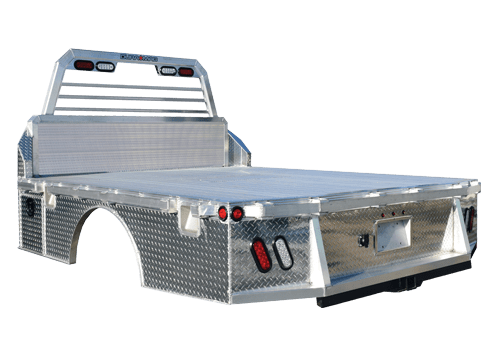
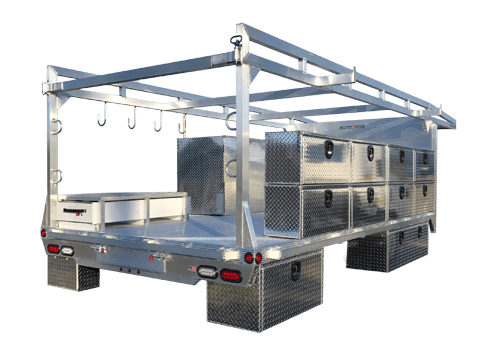
F3 Manufacturing, which includes aluminum truck rack company Magnum Manufacturing as well as truck and van bodies manufacturer DuraMag, offers a large variety of aluminum truck beds to meet your business’s needs. We have truck beds for everyday hauling, heavy duty loads, and everything in between. From landscaping and construction use, to platform and haulers, we have a truck bed designed specifically for your application. Our aluminum beds are thoroughly tested to ensure they are will outlast and out perform any other truck bed on the market.

The History of Magnum Manufacturing and DuraMag

F3 MFG has been involved in the custom aluminum fabrication industry since 1995, and officially entered the aluminum truck body and accessories industries in 2009, launching Magnum Manufacturing and DuraMag Truck Bodies. After studying the truck rack and truck body markets, we determined there was a huge opportunity to make an impact where other manufacturers were not, by introducing aluminum options in these industries. Simply put, it was clear that aluminum racks and truck bodies were far superior to the existing steel options available.

Hauler Truck Beds
Hauler Truck Beds

Our experience in the aluminum recreational trailer industry prior to 2009 proved we could make a major change in truck bodies. In fact, we drove the market change for Aluminum trailers in the recreational trailer business by creating a new way to develop and market Aluminum trailers at steel prices. Our team created the largest manufacturer of Aluminum recreational trailers in North America. We knew F3 MFG could also transform the truck rack and truck and van bodies markets, and that’s exactly what we’ve done.

SALETEN

Quality Sets Us Apart

We use only quality materials when manufacturing our truck racks and bodies, and we’re confident that when maintained, our beds will never rust; regardless if it’s a medium duty bed, landscape bed or dump body. We use high quality box tube extrusion and 6005 T6 extrusion for superior strength and durability. The floors of our truck beds are made from interlocking planking giving a rugged appearance coupled with superior durability. Furthermore, the lights of our truck beds are wired LED lights that are rubber mounted in our box tube extrusion. Our wire harnesses also use heat sink butt connectors. Nothing is exposed to the weather and everything important is always protected.

Custom Bodies
Custom Bodies

Furthermore, our lead times for designing and manufacturing your new product, is incredibly short. Our experienced designers can create custom van and truck bodies to dealer specs faster than the competition. We pride ourselves on the level of precision and expertise that is put into our standard, HD, heavy duty and custom beds and bodies. We can build aluminum truck beds and bodies for Dodge, Ford, GMC, Chevrolet, Toyota trucks and more.

For many of our aluminum truck bed models there are also options for various heavy duty sill lengths and upgrades as well as light bars, depending on the specs of your truck and what you need. To make working with us even easier for you, we can either weld on your sills according to dealer specs or ship them to you separately for you to position as you prefer.

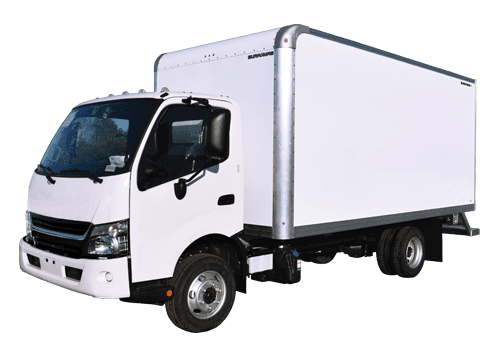
Van Bodies
Van Bodies

We take pride in our work and we look forward to new challenges. We can provide a quote for any custom bed or body that you dream up and look forward to tackling the task. None of our truck beds were designed on a white-board. We build them and tear them apart then rebuild them until we have created the best bed for longevity, performance and durability. Whenever we build a bed we have the working man in mind and put ourselves in your shoes.

The Benefits of Aluminum

We work strictly with aluminum and never with steel, because we know it’s a superior option for our customers. There are numerous benefits to aluminum truck bodies and beds, including cost savings for our customers, increased efficiencies across a business and environmental benefits as well.

Did You Know? Get the real facts about aluminum:
  • Aluminum is no longer priced at a premium. DuraMag truck beds and bodies are priced competitively or lower than our steel competitors.
  • Because our truck bodies weigh up to 40% less than steel, our competitors can haul more payload in every trip. This equates to less drivers needed, and a serious time savings.
  • Lighter truck bodies and beds means less fuel needed every time you fill up at the tank.
  • Another benefit to your team is that aluminum bodies are typically a more comfortable ride for your drivers.
  • They’re more environmentally friendly as they produce fewer greenhouse gases than other metals.
  • An Aluminum body lasts longer than a steel body. Why settle for a steel truck body that will only last the span of one single company truck? Aluminum bodies won’t deteriorate, so they’re able to be moved to a second truck when the initial truck wears out over time.
  • Aluminum bodies are easier to perform maintenance on, because the metal is much easier to cut than steel.
  • With aluminum, there is no more scraping old paint from a steel body before any welding or work can be done!
  • Aluminum truck bodies also do not rust over time like steel bodies do. They appear new and polished, year after year when they’re maintained.
  • Trading in your truck? In the event you leave your aluminum body or bed on, you’ll increase your truck’s trade-in value. On the other hand, rusted steel bodies will generally deduct value from your trade-in.

Summary

At Magnum Manufacturing and DuraMag Truck and Van Bodies, our goal is to continue to shape the truck accessories and bodies markets by showing consumers that opting for aluminum means cost savings, increased fuel efficiencies, less maintenance on rust repair and repaint, and significantly higher payloads among numerous additional benefits. Most importantly, an aluminum product is a more professional look for your company.

The Best Tires For Heavy-Duty Pickup Trucks

Those of us who are owners, or potential owners, of heavy-duty pickup trucks know the importance of having the best possible tires for our vehicle. Because of its use not only as basic transportation but as a utilitarian tool for work as well, our pickup trucks can put their tires through a really rough existence. It can be difficult to know the best tires to choose when putting new ones on for whatever reason.

Below are a few of the best tires for heavy-duty pickup trucks, all manufactured by Goodyear, that you can purchase and install on your heavy-pick up that will provide you with great service, regardless of what you use your truck for.

Why choose Goodyear tires? “As one of the world’s leading tire companies, Goodyear is also one of the largest operators of commercial truck service and tire retreading centers. In addition, it operates approximately 1,240 tire and auto service center outlets where it offers its products for retail sale and provides automotive repair and other services. Goodyear manufactures its products in 49 facilities in 22 countries.” (www.goodyear.com).

Among the benefits of choosing a Goodyear tire are the performance handling of its tires, as well as the all-weather reliability and affordable quality.

RACKSALE

The Best Tires For Heavy-Duty Pickup Trucks 1. The Goodyear Custom Hi-Miler SS

This is an all-season tire that is worth the price. With a tread design that is beyond unusual in its ribbing, long tread life is guaranteed, and you are provided with handling that will assure your confidence on the road. Sized between 12 and 16.5 ml, these tires can handle a maximum load that stands at 4080 pounds, with rims measuring between 8.3 and 9.8 in width approved, with a true measurement at 9.75 inches wide.

This tire comes with a Goodyear Tread Life Limited Warranty, as well as a Goodyear Highway Auto & Light Truck Tire Replacement Limited Warranty. Check with your Goodyear dealership or go online to find out the specific details of your warranty. This tire is priced at just above $780.

  • A Unique Ribbed Tread Design Helps Provide Long Tread Life and Confident Handling
  • Eligible for the Highway Auto and Light Truck Tire Replacement Limited Warranty See Details
  • A Long-Wearing, All-Wheel Position Tire
  • Unique ribbed tread design: Long tread life and confident handling

The Best Tires For Heavy-Duty Pickup Trucks2. The Goodyear Traction Hi-Miler

Features and specs of this particular quality Goodyear truck tire include:

  • Eligibility for Highway Auto & Light Truck Tire Replacement Limited Warranty, as well as the Goodyear 30 Day Pledge
  • A tread designed with 5 ribs for the ultimate in traction and driver control
  • Sturdy nylon and rubber corded body makes for long tire life
  • Great traction on the road and overall long-lasting toughness

3. The Goodyear Wrangler RTS

This is an excellent all-terrain, all-season tire that will simply outperform other tires that are in a comparable class, and the price is right, too. Starting at $116 MSRP, this tire includes the following specs: The Best Tires For Heavy-Duty Pickup Trucks

  • Eligibility for the Highway Auto & Light Truck Tire Replacement Limited Warranty
  • Lug tread design that is continuous, providing a ride that is quiet and comfortable, both on and off-road
  • Flat tread and radial construction improve the life span of the tread as well as the tire itself
  • Included Tire Maintenance Guide, Goodyear 30 Day Pledge, and Goodyear Tread Life Limited Warranty

According to Goodyear, this is a versatile tire that is great for your heavy-duty pick-up truck, and priced affordably for your budget. With a continuous tread lug design, this unique feature is engineered to provide you with a smooth, quiet driving experience regardless of terrain conditions. The light truck tire provides optimum traction for any kind of driving, whether on or off the street.

Additional Tire Companies

Looking to explore additional tire brands for your pickup truck? We’ve outlined three of the top pickup truck tire companies in the industry. Whether you’re looking for a specific tire for a specific job, or you simply want your truck to stand out from the crowd, these are the tire companies to consider.

Nitto

Nitto prides itself on creating tires for road noise reduction, and incorporates technology to aid in “enhancing dynamic contact points while driving.” (www.nittotire.com) Nitto states that their engineers successfully identify and counteract undesirable tire responses in a variety of driving conditions. If you’re looking for high-quality tires that provide extended tread life, improved traction on both wet and dry roads and inspire driver satisfaction, look no further.

BFGoodrich

“Our tires are designed and built by enthusiasts — people who go to track days or off-roading on the weekends. We work to continually improve tire performance (for) more control, more grip and more smiles behind the wheel… When you ride on BFGoodrich tires you experience what your car is really capable of doing.” (www.bfgoodrichtires.com)

Atturo

“Atturo is a tire brand dedicated to the SUV, Cross Over and light truck market segment. Whether you are replacing your original equipment tires, or upgrading to a larger size, Atturo offers a tire to enhance the performance and appearance of your truck at an affordable level. Atturo tires are tested by independent agencies to assure consistent quality standards. A three-year warranty applies to all new Atturo tires.” (www.atturo.com)

Tire Care Resources:

Explore our complete list of the go-to tires and wheels to complete your truck »

Steel vs. Aluminum: Which Truck Beds Are Better?

Truck owners who need a new truck bed typically must choose between steel and aluminum. Steel has been the traditional choice, but aluminum truck beds have been gaining popularity since they entered the market in 2000. The best type of truck bed is currently an issue of debate among truck owners, with cost, strength, weight and maintenance being the most important factors. However, after comparing all the factors, Aluminum beds seem to be the better choice for truck owners and the direction most truck beds will take in the future.

Overview

An aluminum truck bed is generally more expensive than a steel truck bed, although aluminum beds have tremendous benefits. Steel is generally strong enough but only with the burden of heavy weight. Aluminum is less subject to corrosion and therefore requires less maintenance, especially in salty environments. However, all truck beds benefit from regular cleaning to prevent corrosion due to long-term exposure to salts.

According to DuramagTruckBodies.com, Aluminum truck bodies provide the following benefits over steel truck bodies:

  • Less annual maintenance – No rust
  • Lighter body so better fuel economy
  • Higher truck resale value. Rusty steel truck bodies actually reduce resale value
  • Aluminum truck bodies almost always carry longer warranties

In addition to cost savings, there are other benefits of Aluminum vs. steel. Aluminum produces fewer greenhouse gases than other metals, making it more ‘Green’ than steel.

RACKNOW

Strength

Steel vs. Aluminum: Which Truck Beds Are Better? Pure aluminum generally has one-third of both the weight and strength of steel. However, aluminum truck beds are made from aluminum alloys that are significantly stronger than pure aluminum. These alloys are still more than 95 percent aluminum, with metals such as chromium, copper, titanium and zinc comprising most of the remaining five percent. Other metals are also present in small amounts to further tailor an aluminum truck bed’s characteristics.”By adding elements like silicon, magnesium and lithium to pure aluminum and through special processing techniques, aluminum can be engineered to be as strong if not stronger than some steel.” (Aluminum.org) The overall strength of an aluminum bed is generally comparable to that of steel.

According to Aluminum.org, “Aluminum is used by the U.S. military, NASA and others to build vehicles and structures capable of thriving in some of the harshest conditions imaginable.” Furthermore, the U.S. Air Force has relied on the strength of Aluminum – over wood, steel, wire and others – for their military aircrafts. In fact, the airframe for the famed fighter jet – the F-16 – is 80% aluminum.”


Duramag Aluminum Body Destruction Test

Weight

Steel vs. Aluminum: Which Truck Beds Are Better? An aluminum truck bed typically weighs up to 40% less than a steel bed of the same strength. A steel truck bed weighing 2,000 pounds can therefore be replaced by an aluminum truck bed that’s up to 800 pounds lighter. This difference can then be added onto the truck’s payload capacity. “Every pound that you don’t carry around in a truck body or truck bed is a pound you can increase your payload by. Increased payload translates to significant savings: fewer trips to deliver the same amount of product, more on-time deliveries with the same fleet, fewer labor hours, less wear/tear, depreciation of the fleet.” (DuramagTruckBodies.com)

The lower weight of an aluminum truck bed also provides other advantages, such as increased gas mileage. Truck owners who have used both types of truck beds consistently report that an aluminum truck bed provides a smoother ride than a steel bed. Some owners even say that a loaded truck with an aluminum bed gives a smoother ride than a steel bed that’s empty. “If you can use technology and materials to take weight out of the vehicle, you’ll always end up with the best solution,” says Pete Reyes, chief engineer for the 2015 Ford F-150 (Forbes.com).

Corrosion

Steel vs. Aluminum: Which Truck Beds Are Better? All steel alloys contain large amounts of iron, making plain steel highly vulnerable to rust. Manufacturers typically protect steel beds with various galvanizing and galvannealing processes, which generally involve coating the steel with a layer of zinc known as a galvanic layer. Zinc doesn’t rust, but the protection only lasts until the galvanic layer is breached. Some manufacturers also add protective layers of other material such as paint. Regardless of the number of protective layers it has, truck beds are constantly exposed to the abrasive effects of weather and cargo. It’s therefore only a matter of time before the steel is exposed.

Galvanizing and galvannealing are also expensive processes, which can erode the cost savings of a steel bed. The floor is often the only part of a steel truck bed that receives a galvanic layer, meaning that the frame is exposed to the elements. Even with this protective layer, steel beds still don’t resist rust as well as an aluminum bed.

Maintenance

Steel vs. Aluminum: Which Truck Beds Are Better? Aluminum beds generally require little maintenance, with lubrication of hinges and latches being the most significant issue. Steel beds require much more maintenance, which primarily involve the prevention of rust. Truck owners must regularly inspect a steel truck bed for bare steel. Scratches in the paint and galvanic layer must be touched up quickly before the exposed steel begins to rust. Steel truck beds that are galvanized or galvannealed don’t need to be inspected as frequently as plain steel beds.

Galvanized steel beds are more expensive to repair than plain beds. The galvanic layer must be removed before the underlying steel can be welded. Attachment hardware such as screws and rivets also damage the galvanic layer. Repair areas must then be properly finished with a galvanic layer after each repair. The required removal and reapplication of the galvanic layer comprises a significant portion of the repair process for galvanized steel beds.

Today, with the high use of aluminum in pickups and cars, body shops everywhere are equipped to weld aluminum. When it comes to cutting out a damaged component, aluminum is significantly easier to cut. Additionally, steel will have paint on it that has to be removed prior to welding.

Summary

“Aluminum always is more expensive than steel on a per-pound basis, but a couple of things we’ve come to understand are: Very few vehicles every year actually need heavy repair, but even when it comes to replacing panels, the fact that you can just grind out the rivets and not have disturbance to the base metal and just pop in a new panel, we’ve been told, that’s pretty simple and elegant.” (Forbes.com)

Over the past several years, there has been a significant shift away from heavy steel to strong, lightweight aluminum in many facets of the truck industry. This is a transition that’s taken place over the past 10+ years in the aluminum trailer business and one that we’re watching play out with Ford Trucks and in the truck equipment industry with many truck equipment manufacturers. (www.duramagtruckbodies.com)

The Ford Raptor Vs. The Toyota Tundra Rock Warrior

Pickup truck buyers in 2017 who are looking for a full-size off-road truck often still consider the Ford SVT Raptor and Toyota Tundra Rock Warrior. Although both these truck models are discontinued as of 2014, they are still favorites among pickup truck enthusiasts in 2017. Both trucks are relatively similar in terms of general specifications, although they also have some significant differences. Areas in which you’ll want to compare the Ford SVT Raptor and Toyota’s Rock Warrior models include the power train, off-road capability, towing performance and body style.

toyota-vs-ford

Overview of the SVT Ford Raptor

The SVT Ford Raptor is a variation of the twelfth-generation Ford F-150, which is a light-duty pickup truck in production from the 2009 to 2014 model years. The Raptor was specifically intended for off-road use. Pricing for the base model was approximately $42,000 in 2010. Truck enthusiasts went crazy over the Raptors’ ability to effortlessly maneuver unruly terrain and its major upgrades in horsepower over previous Ford truck models.

Additional features of the SVT Ford Raptor to mention are the suspension that got an overhaul, adding about 3 inches. According to CarStory.com, “you’ll also get an upgraded differential to handle the torture of the backcountry. When you evolve the base F-150 into the SVT Raptor, it gains skid plates, body panel molding, modified hood (with optional graphics), sports exhaust, and the bragging rights with Raptor badges visible from every angle.”

The SVT Raptor is considered “the most off-road worthy version” of the Ford F-150 to date. According to TFLtruck, “It can tow 8000 pounds, seat 5 comfortably, haul all of your stuff and still race across the desert at over 100 MPH is perfect air-conditioned comfort.”

RACKTEN

See TFLtruck’s test of the 2014 Ford F-150 SVT Raptor in the Colorado Rockies:

Overview of the Toyota TRD Rock Warrior Package

In 2009, Toyota introduced their version of an off-road themed option package in their pickup truck line, called the TRD Rock Warrior. The Toyota Tundra had been in production since 1999 prior to the release of the Rock Warrior model, with the second generation of Tundra’s debuting in 2007. The base price for the 2009 Toyota Tundra Rock Warrior was about $37,000.

This off-road package was available on the 4×4 Tundra pickup’s with either the Double Cab or the CrewMax cab. According to Toyota, some of the features included in the Rock Warrior package were “17” TRD forged aluminum wheels, LT285/70R-17 BF Goodrich All-Terrian T/A tires, Bilstein shocks, color matched front bumper and grille, matte-black rear bumper, and fog lights.” (www.toyota.com)

Power Train

The standard engine for the 2009 and 2010 Raptor was a 5.4-liter (L) V8 engine generating 310 horsepower (hp) and 365 pound-feet (lb-ft) of torque. A 6.2-L V8 was also available as an option, which generated 411 hp and 434 lb-ft of torque. The 6.2-L engine was the only engine choice for the 2011 to 2014 models.

In contrast, the only engine available for all models of the Rock Warrior is a 5.7-L V8 generating 381 hp and 401 lb-ft of torque. When considering the differences in power between these two trucks, it’s important to consider the type of driving you’ll be doing. According to CarStory.com, “…if off-roading is the sole mission of the truck you’re looking to buy, the Ford F-150 SVT Raptor is a no-brainer… If all you plan to do is city-driving, but you want the off-road badass look, the Tundra may be for you… Get ready to switch the A/C to ‘recirculate’ mode, because if you race a Raptor in a Tundra TRD, all you’ll be doing is breathing the dust and fumes from the Raptor as it takes the lead.”

The Ford Raptor Vs. The Toyota Tundra Rock Warrior
Toyota TRD Rock Warrior Package

Off-roading

The standard transmission for the Raptor is a six-speed automatic. The suspension system includes Fox Racing Shox shocks with external reservoirs that provide a total of 11 inches of travel in the front and 12 inches in the rear. The gear ratio on the locking differential is 4.1:1, which was originally an open differential. However, a limited slip differential was introduced for the 2012 model year. The Raptor also has an off-road driving mode that disables the anti-lock braking system, roll stability control and traction control. This driving mode also provides a more linear curve for power and torque during conditions with low traction.

A six-speed automatic transmission is also standard for the Toyota Tundra, which allows the torque converter to be locked in fifth and sixth years. The 5.7-L engine also has a manual shift mode. Additional driving features of the Rock Warrior include anti-lock brakes, limited-slip differential, stability control and traction control, according to Toyota.com. The Rock Warrior model also includes an integrated backup camera display included in either the rear view mirror or available Display Navigation and has a center-console gated shift lever.

The Ford Raptor Vs. The Toyota Tundra Rock Warrior
Ford Raptor / www.Ford.com

Towing

The maximum towing capacity of the Raptor is 8,000 lbs. for the SuperCrew cab, which also has a 1,770-lb. Payload. Additional towing features of the raptor include a special steering wheel and pre-wired pass-through leads that allow trailer lights to be easily connected to the Raptor’s electrical system.

Towing is where the Toyota Tundra surpasses the Raptor. A tow package option is available for the Rock Warrior, which increases its maximum towing capacity to 10,400 lbs. with a payload of over 2,000 lbs. The transmission and rear-axle ratio on the Rock Warrior are also optimized for towing.

CarStory.com’s blog asks, “but will you really be towing your wakeboarding boat as you climb the tallest mountains in Colorado? Ford takes the design award hands down for the intimidating exterior of the Raptor. C’mon Toyota! To compete with the Raptor the TRD needs to look mean, and convince me it means business on the first impression.”

The Ford Raptor Vs. The Toyota Tundra Rock Warrior
TRD Rock Warrior Package

Body Style

The body style of the Raptor is noticeably different from that of the standard F-150 SuperCrew cab, especially in front of the A pillar. The hood and fenders are different, and the blue oval badge is missing from the front grille. The Raptor is also two inches taller and seven inches wider than the standard SuperCrew cab, so it requires a custom bed.

The Rock Warrior package is only available on a 4×4 Tundra with a CrewMax or Double cab. This option package also includes 17-inch aluminum wheels, and the Double models have a sliding rear window on the cab. Other features of the Rock Warrior include 17-in. split 6-spoke, gunmetal-color-finished, TRD Rock Warrior forged alloy wheels with LT285/70R17 BFGoodrich® All-Terrain T/A tires, a Bilstein® fuel tank and color-keyed front bumper and grille surround. (Toyota.com)

The Ford Raptor Vs. The Toyota Tundra Rock Warrior
Ford Raptor / www.Ford.com

Summary

The performance aspects of the Rock Warrior have remained largely unchanged since its debut, especially the engine and suspension. The ride is therefore noticeably choppy compared to the Raptor. The interior of the Rock Warrior is also unrefined due to the lack of modern features found in the Raptor. However, the towing capacity of a properly configured Rock Warrior significantly exceeds that of the Raptor. One of the most common complaints about Toyota’s Rock Warrior was that the package was “mostly cosmetic” and didn’t offer a lot of meaningful upgrades for Toyota truck drivers.

Regardless of which of these models you decide to go with for your next off-road worthy pickup truck, we can help you outfit your truck with the ultimate accessories.

10 Tips for Detailing Your Truck Wheels Like a Pro

If you love your truck with headache racks as much as we love ours, chances are you take pride in it looking it’s best. After spending a small fortune on wheels and rims, it’s important to properly care for them so they’re able to look brand new for as long as possible. To help you get started, we’ve outlined 10 tips below on how to detail your truck wheels like an expert:

1. Start with the Basics and Understand the Material You’re Cleaning: Chrome, Steel or Aluminum

First, it helps to know what you’re cleaning and polishing.

  • Chrome is a very soft metal. It’s used to coat other metals because of its beautiful finish… but it just (doesn’t) hold up well. Because chrome is relatively soft, it responds very well to polishing. Your elbow grease will be rewarded with incredibly shiny, reflective chrome wheels (or exhaust tips, trim, and any other chrome surface).
  • Steel rims are the most basic form of rim available. They are typically coated black, covered by a hubcap, strong and cheap compared to other alternatives.
  • The most popular rim used today is Aluminum Alloy due to its versatility. It’s much lighter than steel, aesthetically pleasing and better performing.

-via autogeek.net

2. Next, Understand the Finish on Your Wheels

If you’re a truck enthusiast, there are a slew of finishes you may have chosen from for your wheels, to achieve the exact look you want for your pickup truck. Understanding what finish is on your wheel, and how they were made can play a part in how you maintain them. For example, SOTA Offroad wheels come in several options, including:

  1. A semi-gloss black painted wheel that’s clear coated in a semi-gloss clear automotive paint to lock in the machining and prevent the aluminum from oxidizing
  2. A gloss-black finish that’s clear coated in high-gloss clear automotive paint to lock in the machining and prevent the aluminum from oxidizing or
  3. A chrome-like finish wheel, created through “Physical Vapor Deposition.”

-via sotaoffroad.com

3. Recognize the Grime You’re Cleaning Off Your Wheels

What Is Brake Dust?

Brake dust is a pain for anyone who drives and wants to keep their wheels clean and shiny. Unfortunately, it’s a necessary evil of being able to stop your car. Luckily there are things we can do to get rid of it and help minimize its effects on our wheels.

Brake dust is the result of the brake pads squeezing against the rotor while the car is stopping. When the pad wears down under heat and pressure applied to the rotor small metal filings and other components of the brake pad fly off and stick to your wheel. Overtime these particles rust and corrode potentially damaging your wheels if left on the surface too long. A common result of brake dust corrosion is surface pitting specially on chrome plated rims.

-via incrediblydetailed.com

4. Always Clean the Tire Before the Wheel

Before scrubbing the wheel, I like to start by cleaning the tire. Spray your tire cleaning solution on the wheel and let it dwell for a minute. Then scrub the tire down with your tire brush. You want to make sure to get all the dirt and grim off along with any old tire dressing. Tire dressing bonds better and lasts longer on a clean tire.

-via incrediblydetailed.com

5. Use the Right Products on Your Wheels and Save Yourself Some Serious Time

Once your wheels are clean and dry, apply a quality wheel protectant to seal the wheel surface. These products work just like car wax. Apply them with an applicator pad and then buff the wheel. They keep your wheels looking shiny, and they prevent brake dust adhesion. Your wheels look cleaner longer. You have to reapply these products weekly, but it’s better than scrubbing your wheels every two days. The good news is, if you use a wheel wax as recommended, water is the only thing you need to clean your wheels between waxings.

-via autogeek.net

6. Add Auto Detailing Clay to Your Cleaning Routine

Using a clay bar will remove embedded surface contamination that still remains after a maintenance wash. Sometimes the contamination removed is not always visible on the paint to the naked eye… Not only can you clay your vehicles paint, but glass, wheels, lights and more. Detailing clay is safe on most non-porous surfaces such as auto paint, glass, mirrors, plastics and most metals. Once the contamination is removed your wheels will feel as smooth as glass.

FYI, A common misconception about using a clay bar is that it has an impact on removing swirls and scratches, it does not.

-via detailedimage.com

7. It’s Okay to Play It Safe with the Products You Use

If you just spent a small fortune on new wheels for your service truck, chances are you may be hesitant about using a bunch of harsh chemicals on them. If this is the case, keep it simple and play it safe. According to Fuel Off-road, “keeping your wheels clean will extend the life of your finish. Never clean the wheels when they are hot, and only use mild automotive soap and clean water.”

-via fueloffroad.com

8. Choose your tire dressing carefully

Old-fashioned tire dressings contain silicone, which produces a glossy shine but they turn brown over time. In fact, shiny silicone tire dressings can attract dirt. These dressings deplete the rubber’s plasticizers faster, causing it to age prematurely. Newer formulas, like Pinnacle Black Onyx Tire Gel or Optimum Opti-Bond Tire Gel, are water-based and less shiny, but less shiny is the concours look you want. These dressings create the look of new tires with a semi-gloss sheen that doesn’t turn brown. Pinnacle Black Onyx Tire Gel also nourishes the rubber to recreate the look of new tires. You can often layer water-based dressings to get a glossier shine. Follow the directions on the label carefully. Always apply thin coats and allow drying time before you drive your vehicle. Even the best dressing will sling off if it’s on too thick or it doesn’t have time to dry. Avoid pooling of the dressing around raised letters and white walls.

-via autogeek.net

9. Take Care of the Tools You’re Using

Soak your brushes and wash tools in your wash bucket for several minutes to soften and saturate the bristles. Dry your wheels by hand with a clean microfiber towel. This process will show you the spots you missed when scrubbing and allow you to perfect your technique next time you clean your wheels.

-via incrediblydetailed.com

10. When in Doubt, Leave it to the Experts

There’s no sense in investing in the wheels and tires you’ve wanted for a while, and then seriously damaging them with the wrong cleaning products. If you’re not totally sure how to properly clean your wheels, then leave it to the experts. Depending on the type of wheel you have, you run the risk of turning them cloudy or even brown by using the wrong cleaning products, so it may be worth it to simply make am appointment with an experienced company instead.

Looking for more info on maintaining and detailing your new truck wheels? Check out these videos:

“How to clean/polish dirty rims with years of brake dust” from Dedicated Detailing

“How to clean your wheels the good way” from Lorenzo Hamers

What is E-Diesel and Why Does It Matter?

What is E-Diesel?

E-diesel is the name of synthetic diesel created by Audi. The fuel is created from carbon dioxide, water, and electricity with a process powered by renewable energy sources to create a liquid energy carrier called blue crude, which is then refined to generate e-diesel. (Wikipedia)

Audi says that the carbon dioxide used in the process is currently supplied by a biogas facility but, further adding to the green impacts of the process, some of the CO2 is captured directly from the ambient air, taking the greenhouse gas out of the atmosphere.

Audi e-diesel

Who Makes E-Diesel?

Audi, along with the Dresden energy technology corporation Sunfire. Sunfire is Audi’s project partner and the plant operator.

The CO2 used in the process to make e-diesel is currently supplied by a biogas facility.

In addition, Audi’s Zurich-based partner Climeworks is also involved in the project.

How is E-Diesel Different?

“One great advantage of this new fuel is its purity. It is free of sulfur and aromatic compounds – quite unlike mineral diesel. Its high cetane number means that Audi e-diesel is very combustible and its chemical composition makes it suitable for mixing with fossil diesel in any quantity. It can therefore be used as a ‘drop in’ fuel.

If it catches on and is produced for a mass market, it could make internal combustion engines much cleaner in the future.” (Audi.com)

“Synthetic diesel using CO2 is a huge success,” says Germany’s Federal Minister of Education and Research Johanna Wanka, who showed her support last week by putting the first five liters (1.3 gallons) into her work car, an Audi A8. (National Geographic)

According to newatlas.com, the fuel can be combined with conventional diesel fuel, as is often done with biodiesel fuels already.

Bottom Line:

So stay tuned, maybe one day soon your diesel truck might just be running off of water, air and electricity…

https://www.youtube.com/watch?v=55Edq_Irstk

Cost of Ownership: Gas vs. Diesel Comparison

According to a University of Michigan study, owning a diesel vehicle will save you money. Revealed at the Alternative Clean Transportation Expo, the study’s results proved the following:

  • When comparing the gas version of a vehicle to a diesel version, the average total cost of ownership (TCO) was between $2,000- $5,000 less for diesel owners. Cost savings studied were over a 5-year period.
  • Out of the 12 cars studied, the lowest overall savings amount was $67 and the highest was $15,600.
  • Every diesel vehicle studied showed a fuel savings over the comparable gas model, with the most extreme difference clocking in at a 29% in savings.
  • The diesel models also proved better mileage than their gas counterparts, with an 8-44% higher mpg.
  • The study also showed that 11 of the 12 vehicles held their value higher than the gas model after a 3-year span.

Other Facts to Consider: Gas vs. Diesel Vehicles:

When considering a diesel vehicle, it’s important to keep in mind that they will probably be more expensive upfront than gas versions; this is due to a combination of less diesel vehicles being produced in the U.S. than gas vehicles, as well as our stringent emissions requirements.

2015-ford-superduty Also, according to fool.com, “as a rule of thumb, consumers should keep in mind that breakeven points could change significantly in favor of diesels if you do more highway driving than the excel model (that is, 45% of your miles), or drive significantly more miles overall (15,000).”

Ultimately, the biggest factor that comes into play when trying to decide between whether you should stick with a diesel or a gas vehicle, is how you plan to use it. Will you be towing large loads, or commuting an hour to work each day on the highway? Are you looking for better mpg or more torque?

For additional resources:
Check out Truck Trends article »
Explore CarsDirect’s comparison »
Read Torque News’ opinion on the 2016 Toyota Tacoma Gas Engine vs. Chevy Colorado Diesel – Fuel Costs Comparison »

Bed Rails