A brand of the Aebi Schmidt Group

What Happened to the Nissan Frontier Diesel Runner?

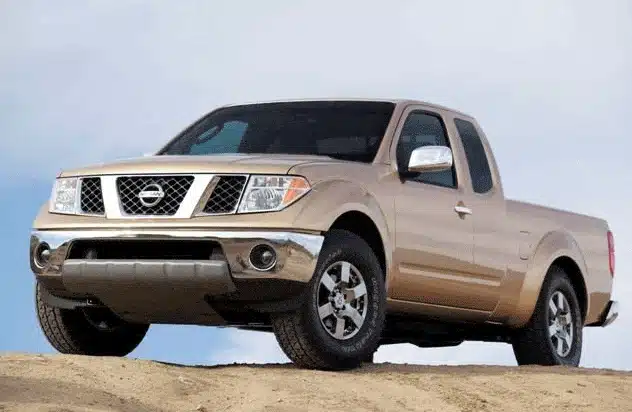
2011_nissan_frontier_d22 The Nissan Frontier is the brand name for the D22 and D40 generations of Nissan utility vehicles in American markets. It’s also sold as the Nissan Navara in many other markets, including Asia, Europe and Australia. The Nissan Frontier Diesel Runner was a concept version of the Frontier that was exhibited in 2014. It hasn’t been put into production as of 2016, although Nissan has implemented some of its primary features in other models.

Overview

The D22 Nissan Frontier was a compact pickup introduced in 1997 as a replacement for the aging D21 Nissan Hardbody. D22 sales were discontinued in the United States in 2004, although it continues to be sold as the Nissan Navara in other countries. The D40 Frontier is a mid-size pickup that replaced the D22 in the United States for the 2004 model year. This version of the Frontier is still in production as of 2016.

Performance

The Frontier Diesel Runner was introduced at the 2014 Chicago Auto Show. It was based on the 2015 Nissan Frontier Desert Runner, which is a trim level of the Frontier that adds a color display, smartphone integration and a navigation system among other technological innovations.

The Diesel Runner had a 2.5-liter l-4 Cummins turbo diesel instead of Nissan’s standard 4.0-liter V6 gas engine. It also had an 8-speed ZF automatic transmission instead of the 5-speed automatic transmission that’s standard for the Frontier. The Diesel Runner’s engine produced 200 horsepower (hp) and more than 350 pound-feet (lb-ft) of torque. This performance level was probably chosen because it matches that of the 2015 Chevrolet Colorado mid-size pickup.

The standard 2015 Frontier receives about 24 miles per gallon (mpg) on the highway. The new transmission and engine increased the fuel economy by about 25 percent, giving the Diesel Runner an estimated highway mileage of about 30 mpg. Nissan claimed that the production version might get as much as 35 mpg on the highway.

Exterior

The primary change to the exterior of the Diesel Runner was a hood insert made of clear plastic, allowing the engine to be viewed without raising the hood. The exterior was painted matte silver and high-gloss red with carbon fiber trim. The hood also had a large Cummins logo in red.

Interior

The interior of the Diesel Runner had the same color scheme as its exterior, instead of the solid black interior that was standard for the Frontier. It also had three auxiliary gauges on top of the center console, which measured transmission temperature, exhaust temperature and turbocharger boost. These gauges would have almost certainly been absent in the production version of the Diesel Runner.

Analysis

The Diesel Runner has not gone into production as of 2016, and is unlikely to be produced in its current form. Even Nissan admits that its drive train won’t fit into the current D40 body without significant alterations. Furthermore, the D40 platform is already 12 years old and will almost certainly be replaced by the time Nissan is ready to put a turbo diesel in a Frontier. However, Nissan did implement this concept in the 2015 Titan.

Titan

The Nissan Titan is a full-size pick that was introduced in the 2004 model year, along with the D40 Frontier. The second generation of the Titan debuted in the 2016 model year, with an engine replacement being the most significant change. The new engine is a 5.0-liter V8 turbo diesel made by Cummins that produces 310 hp and almost 555 lb-ft of torque. Commercial and passenger versions of the Titan will use slightly different versions of this engine.

Conclusion

The purpose of the Nissan Frontier Diesel Runner was to explore the marketability of a mid-size pickup with a turbo diesel engine in the United States. It has already done so with the full-size Titan and will probably return to developing the Frontier as soon as it finishes with the second-generation Titan. Assuming Nissan chooses to include a turbo diesel engine as a power train option for the Frontier at all, it won’t happen before the 2017 model year.

For more information, visit http://www.topspeed.com/cars/nissan/2015-nissan-frontier-diesel-runner-powered-by-cummins-ar162301.html

Which Magnum Truck Rack Is Best for You?

A truck rack is basically a metal frame that attaches to a pickup truck behind the rear of the cab. Its primary purpose is to prevent items in the bed of the truck from going through the rear window during a sudden stop. Truck racks are most often used on working trucks that regularly carry cargo, although they frequently appear on passenger trucks for cosmetic purposes. They also serve as a platform upon which to hang equipment such as ladders. Accessories for truck racks include emergency lights and louvers.

Overview

Magnum truck racks are available in four profiles, including standard profile, low profile, high profile and service profiles. Most models are customized for a particular truck to ensure the best fit without overlapping the truck’s body lines. However, service-profile racks are sold in generic sizes.

Our truck racks are made from aluminum due to its light weight and durability and are constructed with MIG and TIG welds. Each truck rack is equipped with a glide track for maximum versatility and ease of installation. They’re also compatible with our full line of truck rack accessories.

Standard Profile

Chevy Colorado - Truck Rack – Standard Truck racks with a standard profile have a medium height between the low-profile and high-profile racks. They’re compatible with most between-the-rail tonneau covers and are available with a black matte finish. The base model has bars that extend all the way across the frame, while the window-cut-out version has an empty square inside the frame that allows passengers to look out of the rear cab window. The high-visibility rack has no bars at all inside the frame for maximum visibility. The base model and hallow-point model costs $469, and the window-cut-out model costs $519.

The weight of the standard-profile racks is between 27 and 31 pounds, depending on the truck. The width varies from 70 to 74.5 inches, and the height ranges from 24 to 27.25 inches. The depth of all versions of the standard-profile rack is 10 inches.

Low Profile

2018 Ford F250 SuperDuty with a Magnum Low Pro rack with window cutout and lights The height of low-profile racks slightly less than that of the standard racks. Low-profile racks have greater cosmetic appeal and are most likely to be used on passenger trucks. These racks have custom jigs to provide the best possible fit, and will fit most trucks with tonneau covers. Low-profile racks come equipped with fully functional lights, including brakes, reverse and signal lights. The wiring harness on these racks allows the lights to be easily connected to the truck’s organs.

The base model and high-visibility versions of the low-profile racks cost $599, and the window-cut-out version costs $649. The height varies from 20 to 24.25 inches, and the width ranges from 70 to 74.5 inches depending on the truck. The weight is between 30 and 34 pounds, and the depth is 10 inches.

High Profile

2018 Ford F350 High Pro Rack with Lights The high-profile racks are the tallest models and provide the greatest functionality. They provide more coverage of the rear window and offer a larger number of places from which to hang equipment. High-profile racks also have a more rugged design than the standard or low-profile racks, but are otherwise similar to the low-profile racks.

The base model with lights and high-visibility versions of the high-profile racks cost $599, and the window-cut-out version costs $649. The height varies from 24 to 27.25 inches, and the width ranges from 70 to 74.5 inches depending on the truck. The weight is between 27 and 31 pounds, and the depth is 10 inches.

Service Profile

2015 Ford F250 Service Body Truck Rack Service profile racks have the lowest profile of all our racks and are significantly lower than even the low-profile racks. The primary purpose of these racks is to serve as an attachment platform for equipment.

They’re available in heights of 16, 20 and 24 inches. The available finishes are a black matte finish or a black mill finish. These racks are available with and without lights. The base models cost $429 for the mill finish and $479 for the matte finish. Service-profile racks with lights cost $529 for the mill finish and $579 for the matte finish.

Whichever headache rack is best for you and your truck, Magnum Truck Racks has a compatible rack for you. Check out our various racks and pick your favorite accessories, whether that be lights, window cut outs, or even our American flag style racks! American flag truck rack by Magnum Truck Racks

GMC Trucks Get 8-speed Transmissions in 2015

General Motors Corporation (GMC) introduced an 8-speed transmission on some of its cars and trucks in 2015 and increased the number of vehicles available with this option in 2016. This transmission is especially beneficial for large engines that deliver power over a wide RPM range. The vehicles available with the new transmission include those made under both the GMC name and the Chevrolet brand.

Overview

The 8L90 transmission is an 8-speed automatic manufactured by GMC. It has a hydraulic, or hydramatic design that GMC first introduced for the 1940 model year. Hydraulic transmissions provide automatic shifting by combining the hydraulic function of a planetary gearbox with fluid coupling.

The 8L90 is designed for longitudinal engines in which the engine’s crankshaft is parallel with the vehicle’s long axis. This transmission may be used with engines that are located in the front or rear of the vehicle. A bell housing contains the 8L90 when it’s attached to a front engine, although it’s located next to the differential on rear engines.

Engines

The 8L90 is available for GMC’s family of 6.2-liter engines with a 4.06-inch bore, which include the LT1, LT4 and L86. These engines have a range of applications from sports cars to heavy-duty trucks.

The LT1 has been the standard engine for the Chevrolet Corvette Stingray since 2014 and was also introduced in the Chevrolet Camaro for 2016. This engine produces at least 455 horsepower (hp) and 460 pound-feet (lb-ft) of torque, depending on configuration. The LT4 is a supercharged version of the LT1 that’s available for the Corvette Z06 since 2015 and the Cadillac CTS-V since 2016. It produces at least 640 hp and 630 lb-ft of torque, depending on configuration.

The L86, commonly known as the EcoTec3 6.2L is a small-block engine used in trucks. It’s a modified LT1 engine with a reduced compression ratio of 11.5 to 1. It produces 420 hp and 460 lb-ft of torque. This engine has been available since 2014 for the GMC Sierra and Chevrolet Silverado, which are essentially identical except for the front grille and name badge. The L86 has also been available for the GMC Yukon Denali and Cadillac Escalade since 2014.

Gear Ratios

The gear ratios for the 8L90 transmission are as follows:

• 1 4.56:1
• 2 2.97:1
• 3 2.08:1
• 4 1.69:1
• 5 1.27:1
• 6 1.00:1
• 7 0.85:1
• 8 0.65:1
• Reverse 3.82:1

The final drive ratio of vehicles with the 8L90 varies by model. For example, it’s 3.23:1 for the standard Corvette Stingray and Z06, and 2.73:1 for the Stingray Z51. The final drive ratio for the Cadillac ATS-V and Cadillac CTS-V is 2.85:1. The final drive ratio is 3.42:1 for Chevrolet Silverado/GMC Sierra models with the Max Trailering Package and 3.23:1 for all other GMC trucks and SUVs.

Benefits

The larger number of gears in the 8L90 means that their gear ratios are more closely spaced. This characteristic provides a number of benefits, including faster shifting, greater acceleration and improved fuel economy. The increased flexibility in power delivery is particularly helpful for trucks carrying heavy cargo or trailers.

The higher gears allow the engine to run at a lower speed, which improves fuel economy. This improvement is especially noticeable for heavy vehicles with two-wheel drive (2WD) traveling at highway speeds. The two additional gears of the 8L90 also allowed GMC to reduce the rear axle ratio, resulting in a more relaxed driving experience at highway speeds.

For example, the fuel economy of a 2014 GMC Yukon with 2WD is 18 miles per gallon (mpg). The combination of the 8L90 transmission and rear axle ratio of 3.23:1 increased this vehicle’s fuel economy to 22 MPG. This figure is one mpg more than the Yukon’s fuel economy with the base 5.3-l V8 engine.

Conclusion

The only other truck that’s currently available with an 8-speed transmission is the Dodge Ram 1500. GMC’s decision to offer this transmission on many of its vehicles therefore has the potential to increase its sales. However, this feature will need to compete against brand loyalty, which is especially high among truck owners.

Snow Plow Buying Guide – Adding a Plow to Your Truck This Winter

Are you considering adding a snowplow to your truck? If you live in an area that receives heavy snowfall, a snowplow can be a great asset to your truck. Yet purchasing a snowplow is not something to do without the proper research. If you are responsible for plowing a large area, here’s what you should know about snowplows.

Continue reading “Snow Plow Buying Guide – Adding a Plow to Your Truck This Winter”

5 Reasons Your Truck Needs a Truck Rack

If your truck does not currently have a truck rack, you are missing out! Truck racks, the metal attachments that are fitted to the back of a pickup truck behind the back window, provide invaluable protection and support for working trucks. If you are regularly carrying loads in your truck, or are hauling large items, without a truck rack, your truck and your safety as a driver are at risk. Here are five benefits of truck racks that you need to consider.

Continue reading “5 Reasons Your Truck Needs a Truck Rack”

Magnum Backracks for Trucks

A truck headache rack is a baffle, or wall-like structure, that protects the driver during a sudden stop. The specific placement of headache rack depends on the type of truck. For example, the back rack on a pickup truck is typically installed directly behind the cab. A flatbed trailer usually has the headache rack at the front of the trailer or the rear of the tractor.

Continue reading “Magnum Backracks for Trucks”

The Ins and Outs of Truck Lift Kits

A lift kit is an aftermarket kit that raises a vehicle’s ride height. Its primary purpose is usually to allow the vehicle to clear large objects and travel over rough terrain more easily. Lift kits are most common for trucks, SUVs and other off-road vehicles that benefit from an increased ride height. The installation of a truck lift kit also increases the vehicle’s center of gravity, which changes its driving behavior. Truck lift kits may generally be classified as body lifts and suspension lifts.

Continue reading “The Ins and Outs of Truck Lift Kits”

The Types and Styles of Truck Beds

The bed is often one of the most important factors to consider when buying a truck. However, a comparison of truck beds can be challenging since manufacturers often use their own proprietary terms to describe the same style of bed. Additionally, bed sizes aren’t well standardized between different truck manufacturers. This fact often results in a considerable variation in size between truck beds made by different manufacturers, even when the beds have the same general size category. Aftermarket truck beds are also readily available, typically for the purpose of carrying a specific cargo with unusual requirements.

Continue reading “The Types and Styles of Truck Beds”

Increasing The Height Of Your Truck With A Lift Kit

A lift kit is a collection of parts that increases the height of a truck, either by raising the suspension or the body itself. They are most commonly sold as an aftermarket product, although some new 4x4s are now sold with a lift kit already installed. A lift kit has a significant effect on the truck’s driving behavior, which the owner should consider carefully before installing. A truck may also require additional modifications to accommodate the increase in vehicle height.

Continue reading “Increasing The Height Of Your Truck With A Lift Kit”

The Trail Ready Beadlock Wheel – Is It The Best on the Market?

A bead lock is a safety feature for tires that’s primarily used in off-road racing, especially four-wheel drive vehicles. Several designs are available, depending on the particular type of vehicle and its drive train. The Trail Ready Beadlock Wheel is a highly-rated brand of bead lock specifically designed for competitive racing; but does it deserve your hard earned money? Let’s lock it down.

Overview

A tire bead is the edge of the tire that’s placed against the wheel rim. Air pressure inside the tire pushes the tire bead against the inside of the rim when the tire is inflated. This air pressure combined with the soft rubber of modern tires is normally sufficient to keep the tires in place. However, tires can easily separate from the wheel under extreme conditions such as off-road racing. A bead lock prevents tire separation by mechanically securing the tire bead to the rim, rather than just relying on air pressure to perform this function.

Bead locks were introduced on military trucks shortly after World War II, and the military currently uses Trail Ready Beadlock Wheels on its special operations off-road vehicles. Trail Ready Beadlock Wheels are still used on military vehicles Marsh Racing Wheels manufactured the first bead locks for racing in 1980 after testing them for years. Several specific designs of modern bead locks are currently available, depending on the type of vehicle. A bead lock made for a car or truck is a metal ring with 16 to 32 holes around its circumference. Bolts are then placed into these holes to clamp the tire to the wheel. Motorcycle bead locks are more precisely known as bead stoppers or rim locks. These devices are curved plates that are held in place by a single bolt.

Function

Bead locks help prevent the tire from dislodging during hard cornering, and they also reduce the possibility of it slipping off the rim during high acceleration and braking. These functions are especially helpful for racing on dirt tracks, where tires must be under inflated to increase traction on loose surfaces. The tires used for dirt racing have coarse treads, but it’s still necessary to increase the contact surface by reducing the air pressure in the tires.

However, under inflation creates a safety hazard since the air pressure may not be sufficient to keep the tire on the wheel by itself. The forces pushing the tire to the side of the wheel are greatest during cornering, especially on the rear outside tire. The rear tires have greater stress because they’re pushing the truck and the outside tires have more stress because the truck’s weight shifts to the outside during cornering. Under inflated tires are also more likely to overheat due to the increased friction with the ground.

Even with bead locks, tires can still slip on the rims without coming off the wheel. This can occur when the traction between the tire and the ground is greater than the friction between the rim and the tire.

The Trail Ready Beadlock Wheel Features

The Trail Ready Beadlock mounts to the outside of the tire bead on one side of the wheel. The package also includes a set of beads that you can place inside the tire well. These beads settle in thin spots on the tire, thus improving its balance. This bead lock uses 24 mounting bolts that should be fastened in a crisscross pattern to distribute their tension evenly. Trail Ready bead locks also have a locking ring that overlaps the wheel for additional security. A flat tire won’t damage these parts. Take a look at the image below, from TR Beadlock Wheels Facebook page, which shows their high quality materials; it speaks for itself.

TR Beadlock Wheel - Before and After Race Damage Repair

TR Racer Brian Shirley of Lucky Dog racing demonstrates the advantage of a US made cast wheel. Our wheels are counter-pressure cast at nearly twice the pressure of the imports resulting in a part that shares some strength characteristics with forged wheels. Brian killed this wheel running a whole race lap on a flat tire, then hammered it back into shape, keeping it for a spare. Try this with a China wheel and you’ll need a bag for all the pieces. Thanks for the photo Brian.
– TR Beadlock Wheels

Benefits

Bead-lock wheels are generally designed for high performance and durability, since they’re often used in racing. The Trail Ready Beadlock Wheel is especially capable of handling almost any condition, including heavy off-roading. It can perform well on many off-road surfaces such as dirt tracks, rocks and deserts without compromising ride comfort on paved roads. They’re also available in a particularly wide variety of colors, sizes and styles. These are just some of the reasons that Trail Ready Beadlock Wheels are the first choice of competitive off-road racers, and should be considered when looking to spend those hard earned dollars.

All photos credit to: TR Beadlock Wheels Facebook Page