Category: Truck News & Info

The main objective of a track kit is to allow your vehicle to easily drive across terrain, such as snow or mud, that normal tires can’t handle. While there are various types, all track kits replace the wheels of your vehicle and provide much stronger traction and protection than tires do.
Track kits are generally rubber, and they come in different sizes. Dominator offers two different sizes, and the weight and size of your vehicle will determine which size you will need. The smaller size, otherwise known as the standard size, weighs 176 pounds and has a ground length of 48 inches. The larger size, or XL model, weighs 193 pounds and has a ground length of 57 inches. Both sizes have a center height of 21 inches and are 15 inches wide.
Track kits also come with a variety of bolt patterns. Because most vehicles vary greatly in this area, it is important to make sure you choose the correct pattern for your truck. To make this process easier, you can look online to see what pattern fits your specific vehicle.
Because of the size of track kits, you may be concerned if your vehicle will still fit in your garage or on trails that you plan to drive on. If this is an issue for you, there are very specific instructions on how to measure the dimensions of a track kit. These measurements also vary depending on your vehicle, and you can find lists online with the dimensions listed for many popular vehicles.
Not only do track kits allow you to have fun driving through snowy mountains and muddy back yard trails, but they also have many practical uses as well. These uses include the maintenance of ski and snowmobile trails, easy access to camping sites, and trail patrol and rescue. Because of the many options available, it’s possible to find a track kit to fit almost any pickup truck.

High Range 4wd
High Range 4wd, or 4-high, allows you to drive full speed, if needed. The high range 4wd ratios are the same gear ratios that the vehicle has in 2wd. The best time to use 4 high is when additional traction is needed on terrain that is not very steep. 4 high is good to use on snow, ice, and muddy roads. Or even when your not operating on paved roads, such as rocky; gravel roads. As well as when your possibly stuck in sand, or on snowy and slippery icy conditions.
Low Range 4wd
Low Range 4wd, or 4-low, alters your vehicle gearing ratio. 4 Low was made so that your vehicle will creep at a slow speed, and that will also reduce the risk of damage to your vehicle. Manufacturers prefer you to keep your speed under 45mph while using your low range 4wd. Remember that 4 low DOES NOT give you more traction, but then it does provide a considerable amount of more torque, usually about two to three times more than that of 4 high at very slow speeds. The optimal time to use your 4 low range is on wet smooth roads or landscape, such as in wet and heavy snow. Or when attempting to ascend and descend steep hills on very rough landscape, like taking trails or off driving road. When tearing through mud, climbing rocks, and powering through deep sand or water.
Photo credit: Robert W. Howington / Foter.com / CC BY-SA

Driver Responsibility
First and foremost, the driver who has control over the vehicle will always determine the speed of the vehicle. Most high-speed accidents result from driver error, not component malfunction. This means driving at or under the posted speed limit, especially under the limit when the conditions are not favorable, is preferred. Ice/sleet, snow and wet roads will always make the roads more hazardous to negotiate, causing slipping and skidding, and this is magnified at higher speeds. AWD (all wheel drive) and regular 4WD allow for more stability and traction on uneven or slippery surfaces and make driving safer. However, they cannot defy the law of physics—going too fast means performance parameters have been exceeded for the condition involved.
The Different 4WD Systems
The general AWD and 4WD systems do not have a mechanical unsafe speed limit that will permanently damage components or negatively affect performance. The exception is the “part time” or manually operated system that allows the driver to choose between 2WD and 4WD. Part time 4WD is not as precise as regular 4WD and AWD, which are compensate automatically in function. Damage to the drive components can result when part time drive is chosen for dry, smooth surfaces. Also, it does not permit stability or traction control or ABS to function. Part time 4WD dictates that 2-wheel and 4-wheel drive be alternated between dry and slippery surfaces respectively. Using 4WD on smooth, dry surfaces at high speeds may result in serious damage to driveline components.
Part Time 4WD Problems
With the part time 4WD system, the transmission case powers the rear and front drive shafts at the same RPM. If the front axle needs more RPM, it cannot be delivered, which causes an uneven traction problem. This is because the combined RPM of the front axels are higher than that of the rears. In the case where the front wheels are momentarily gaining traction on a non-slippery surface and the rear wheels are digging in, the effect causes a discrepancy between the front and rear axle—an added rotational force that comes from the front shaft that must be slowed down to match the rear end rotational force. The result is a “bind” that puts undue pressure on the transfer case and all the associated components. The faster the engine RPM, the more risk involved. In addition, driving with part time 4WD at highway speeds on dry, smooth surfaces will can cause irreversible damage to differential gears, U-Joints, axles, drive shafts, bearings and transfer case chains and gears
Photo credit: Robert S. Donovan / Foter.com / CC BY
The newly released 2014 GMC Sierra and Chevrolet Silverado come with a new option that combines power and fuel efficiency. Both pickup trucks are available with the new 6.2-liter V8 EcoTec3 engine. The new motor has been given a highway rating of 21 mpg. The two wheel drive versions of both pickups trucks received ratings from the EPA of 21 mpg on the highway and 15 mpg in the city. The four wheel drive version of these same tow pickup trucks received ratings of 20 mpg on the highway and 14 mpg in the city.
The full economy estimates for the new 6.2-liter V8 EcoTec3 engine is only 2 to 4 mpg less than the ratings for the two other motor option consumers can choose for those pickups. The 6.2-liter V8 EcoTec3 engine comes with an SAE certified 420 horsepower, 460 foot pounds of torque, which is the most torque and power for any of any light weight pickup motor.
A GM spokesperson has pointed out that the towing and power capabilities is the fundamental attraction to a full size pickup truck. With that being said, he goes on to explain that the GMC Sierra and Chevrolet Silverado now have the ability to provide consumers unmatched towing capabilities and power. The V-8 option in the 2014 Silverado 1500 sets GM far ahead of the competition as being the most powerful of all the V-8 gas engines currently being offered by any automaker.
The 6.2-liter V8 EcoTec3 engine comes with direct fuel injection, variable valve timing and cylinder deactivation. The 6.2-liter V8 EcoTec3 engine utilizes a compact overhead valve design. To help reduce the weight of the vehicle and improve energy savings, the engine utilizes aluminum cylinder heads and blocks. GM continues to stay in the forefront of the competition by providing their consumers with the option to purchase the strongest motor, yet focusing on making that motor lighter and fuel efficient.
The 2014 GMC Sierra and Chevrolet Silverado recently went on sale hosting a bunch of newer technologies designed to attract more consumers and continue to keep GM in the forefront of innovation when it comes to engine efficiency. The Chevrolet Silverado continues to be the most important of all the pickup trucks for the Detroit automaker. The Chevrolet Silverado continues to be one of the best selling pickup trucks in the United States and the new 6.2-liter V8 EcoTec3 engine will only add to that appeal.

The ram ECOdiesel. The ram is so quick that it produces more torque than the original heavy duty Cummins diesel ram which was made in late 1980s. When you compare with the star pentstar 3.6 liter V-6 engine, the ecodisel engine is down sixty five hp but up one hundred lb-ft while even further on horsepower to the 5.7-liter Hemi V-8, the EcoDiesel engine beats the torque of engine brutish engine rating by ten lb-ft. Furthermore, Hemi and Pentastar both do require roughly four thousand revolutions per minute in order to hit their torque peak – more than double the engine speed needed in the EcoDiesel.
The ram ECOdiesel engine feels good from behind wheel as it happens in thejeep. The grunt id delivered with immediacy because of much low end torque and the engine runs smoothly to its four thousand eight hundred revolutions per minute. The ZF designed 8 speed is good as the engine because it delivers silky smooth hustling and shifts through its ratios without delay. The rotary gear selector operates frankly and easily which makes it to look pretty cool. There is a small diesel clatter noticeable at idle but it is not enough to be able to notice when the windows up.
Thus the Ram EcoDiesel is best to drive. The main reason why you have to purchase over a Hemi-t or pentastar is its efficiency. Of course, there are fewer specifications which are more important to truck customers than the tow rating, and that is where the EcoDiesel is a mixed bag. While the EcoDiesel’s nine thousand-pound which outperforms the Pentastar’s seven thousand two hundred fifty -pound rating, it does not quite touch the 5.7-liter Hemi’s ten thousand four hundred and fifty-pound rating. Still, Ram claims the EcoDiesel’s ascending in fuel efficiency could pay for its price difference within 3 years with average use. And because of its strong low end, Ram expects the difference in fuel efficiency to be even greater.
Ram ECOdiesel engine is the best engine for your truck so go to its official website and order one and experience good drive on road.
Photo credit: Chrysler Group / Foter / CC BY-NC-ND

If the items are relatively heavy and have a low profile, it might not be necessary to strap them into the truck bed if the tailgate is left secured. Items that rise above the walls of the bed will probably need to be strapped or tied down to keep others safe.
Many trucks beds have options for tying down items. These can be great places to deploy ratchet straps or bungee cords. Additionally, ropes and cords that are not electrical can be utilized for tying down objects.
Tall items like refrigerators can be quite difficult to transport. Placing such an item near the cab of a truck is usually the best bet, because they can be steadied to some degree by the cab. It is best to secure these large items over the top and around the object. The straps should be relatively high on the body of a refrigerator to make it less likely to tip over. Shorter items like washers, dryers or stoves should also be transported in a similar fashion. They should be strapped down as securely as possible and transported near the cab. Of course, each strap should be securely fastened to the bed of the truck.
Long items that will not stand up should be transported with the tailgate down. The tailgate is not designed to support heavy weight. These items that could include pipes or boards should be tied together and then secured to the bed of the truck with straps or bungee cords. Placing a strap around the end of the boards that faces the open tailgate will provide additional stability.
Very light items should have a tarp or other covering to avoid having them fly out of the bed of the truck. These tips will help keep the likelihood of damage down. Regardless of how well a load is secured, it is also important to remember to avoid making sharp turns very quickly as the load can shift and cause massive problems.
Photo credit: artnoose / Foter / CC BY-NC-SA

Bak Flip Tonneau Cover
The Bak Flip Tonneau Cover has some features that are quite unique, such as the ability to give you access to the entire truck bed if necessary. This cover will fold up against the cab of the truck being out of the way of the truck bed giving you all the room you will need. You can easily haul or transport all of the things you need, such as a 5th Wheeler, without needing to remove the cover first. This cover also gives you better visibility in the rear because it lays flush with the bedside rather than the top of the truck bed.
Lund Genesis Roll-Up Tonneau Cover
The fabric of this cover is made using materials that are strong and durable. It is tear-resistant and heavy duty ensuring it will last for years to come. Water will not pool up on this cover because the ribs are made using aluminum. The black rails and bows are stylish but are also what seals the cover up tight using the heavy duty Velcro sealing system. This system helps to keep the bed of the truck sealed, but is still easy to open and close. This cover also has an automatic tension control feature in the latch, that is unique, making it easier to close.
Truxedo Lo Pro QT Tonneau Cover
This cover can be quickly installed. Within just a couple of minutes, you can have the side rails clamped on and the spring-loaded header guide all put into place. Even though the cover was designed to install quickly, the quality of it was not compromised. It features Velcro brand fastening which will keep the cover securely in place, as well as automatic tension control. You will also receive a lifetime warranty for this cover giving you the peace of mind that you will have a cover that will stand the test of time.
Knowing more about various tonneau covers on the market gives you the information you need to decide which one is best for you.
Photo credit: DiamondBack Truck Covers / Foter / CC BY-SA

The knob on the transmissions 8 speed gear has an actual bumble bee embedded in amber. This truck first appeared 10 years ago. Constant improvements have been made to this concept truck.
The Rumble Bee concept has long existed dating back to two previous high performance trucks. The original Dodge Super Bee was a muscle car in the 70’s, while the limited edition Ram 1500 Rumble Bee launched in 2003.
The truck was bright yellow with black stripes and a bee logo on the back of the bed. This thing is loaded with power with its 395 horsepower, and 407 pounds of torque.
The concept trucked is based on a standard Ram 1500 R/T with two doors. The Rumble Bee has a custom pearl yellow paint job featuring black stripes and bee decals. The color is obviously Drone Yellow. The Ram logo is blacked out.
The cargo bed is covered with a yellow tonneau cover. There is a spoiler at the back of the truck. The hood features hood scoops and the front features an integrated splitter.
The truck on the inside is black leather and bright yellow stitching. The seat backs are custom embroidered with the Rumble Bee. The seats surfaces are a yellow/black honeycomb fabric.
The engine on this monster is spectacular featuring a 5.7-liter, 395-horsepower Hemi V-8. Mopar offers a body kit, cold air intake and special exhaust on this truck. The truck features 24 inch wheels. The Rumble Bee also offers an exhaust bypass and can be activated by a button on the dashboard. The 8 speed automatic transmission can shift the rear wheels to a 4.10 differential.
The interior also features the rumble bee logo and lettering on the floor mats and doors. The highlight is still the obvious real drone on a honeycomb background. The rumble bee is a very cool bee featuring a helmet, a hemi, and wheels. The black background is honeycombed. The wheel rims can also be blacked out as can the tail lights.
This truck does not fall short of expectations and certainly doesn’t lack on individuality or character. There are many custom options that can be added to this truck. This truck doesn’t lack quality or style and is a favorite even in concept.
Photo credit: Flicktone / Foter / CC BY-NC-ND

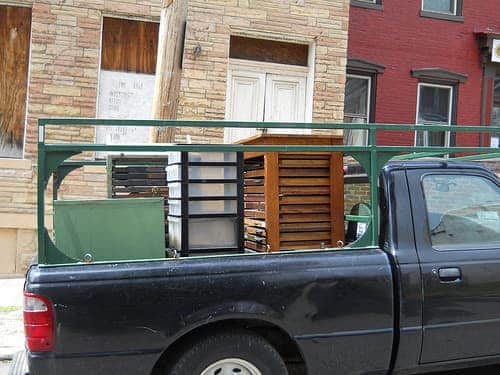
The headache rack can be custom-made for your F-1150 or bought off the shelf. It can be permanently bolted onto the bed rails or mounted to stake pocket holes. This piece of equipment serves many purposes and protects the rear window from being compromised by shifting cargo. Horizontal louvers are built into the frame and help cut down on wind resistance. The louvers also block out harsh light and provide additional shade in the cabin.
The F-150 is perfect for hauling lumber, lumber, pipe or even a motorcycle in the bed of the truck. However, if you hit the brakes and the load is not properly strapped down, your load may penetrate the rear window and end up inside the cabin. This could cause serious injury to your occupants, and there is a chance that your load could even penetrate the front window. The headache rack is designed as a barrier to prevent injury from a load shift. Headache racks also provide additional protection in a rollover accident. Due to the strength of the steel and location on the cab, it can help prevent crushing injuries.
In addition to safety, many racks can be used as a utilitarian device. Depending on the rack you select, the top can extend vertically above the cab of the truck. This gives you the option of hauling ladders and other equipment without worrying about scratching the paint. The louvers are useful for tying equipment securely to keep it from shifting in any direction. Channel systems on some racks give you the option of adding lights and tie downs for additional safety. Reflectors can be added to the sides and top of the rack to give your truck more visibility at night.
Whether your need is utilitarian or safety, a headache rack on your F-150 is added value because it is designed to keep your cab cooler, protect your occupants from load shifts and makes hauling loads even safer.